

Power Substation Equipment: Key Components and Their Functions
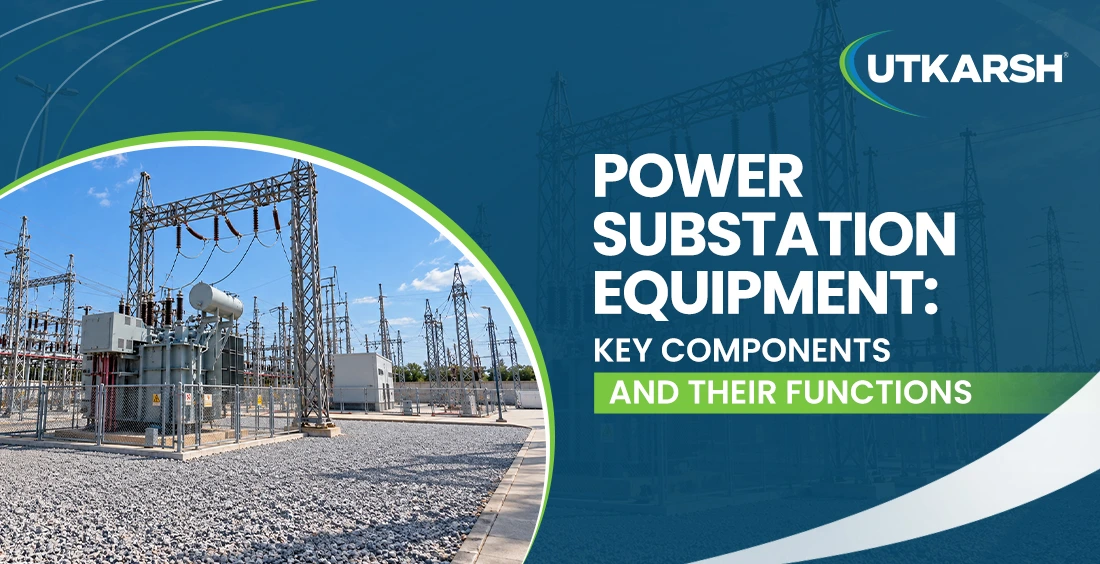
Electricity travels a long path before it reaches your home. It moves from power plants through high-voltage lines. Then it passes through a power substation. This is where voltage levels change. This is also where the power gets safer to use.
A power substation is a key link in the electrical power distribution system. It connects transmission lines. It controls voltage. It protects the whole grid from faults. Without strong substation equipment, the power supply would be unreliable and unsafe.
In this article, we will look at the key components of a power substation. We will also explain what each part does. This will help you understand how a power substation keeps our homes and industries running.
What is a Power Substation?
A power substation is a facility in the power network. It connects two or more transmission lines. It allows electricity to flow across the grid in a smooth and controlled way.
Most power substations use transformers. These transformers raise or lower the voltage. This happens between high transmission voltages and lower distribution voltages. Some substations also connect two different transmission voltages.
There are different types of power substations. These include:
- Step-up transmission substations
- Step-down transmission substations
- Distribution substations
- Underground distribution substations
Each type plays a role in moving power from the plant to the end user.
Key Power Substation Equipment and Their Functions
A substation is not just one machine. It is a system of many parts. Each part has its own job. Together, they keep power flowing safely. Let's look at the main pieces of switchyard equipment found in a power substation.
1. Power Transformers
The power transformer is the heart of any substation. It changes voltage levels. It steps voltage up for long-distance transmission. It steps voltage down for local distribution. This keeps energy loss low and power delivery efficient.
2. Circuit Breakers
A circuit breaker is a safety switch. It can open or close a circuit under load. If a fault happens, like a short circuit, the breaker cuts off the power fast. This protects equipment and prevents damage or fire.
3. Isolators (Disconnect Switches)
Isolators are simple switches. They separate a part of the circuit from the rest. Workers use isolators during maintenance. Isolators only work when there is no current flowing. This makes them different from circuit breakers.
4. Busbars
A busbar is a metal bar or strip. It carries electric current inside the substation. It connects incoming and outgoing lines. Busbars act like a central hub. All equipment links back to the busbar system.
5. Lightning Arresters (Surge Arresters)
Lightning can strike power lines. This sends a sudden voltage spike into the system. A lightning arrester protects equipment from this spike. It sends the extra voltage safely into the ground.
6. Current Transformers (CTs)
A current transformer measures the current flowing through a line. It reduces high current to a smaller, safer value. This value is used for metering and protection devices.
7. Potential Transformers (PTs)
A potential transformer, also called a voltage transformer, measures voltage. Like the CT, it reduces high voltage to a lower, safe value. This helps with monitoring and control.
8. Protective Relays
Relays act as the brain of the protection system. They sense faults, like overloads or short circuits. When they detect a problem, they send a signal to the circuit breaker. This makes the breaker trip and stop the fault from spreading.
9. Insulators
Insulators hold live equipment in place. They stop current from leaking into the ground or nearby structures. They are made from materials like porcelain, glass, or polymer. Good insulators are key to substation safety.
10. Capacitor Banks
Capacitor banks improve power quality. They correct power factor issues. This reduces energy loss and improves voltage stability across the grid.
11. Substation and Switchyard Structures
Every substation needs strong steel structures. These structures support transformers, busbars, and other switchyard equipment. They also hold overhead lines at a safe height. Durable structures keep the substation stable in all weather conditions.
12. Control Panels and SCADA Systems
Control panels let operators monitor and manage the substation. Many modern substations use SCADA (Supervisory Control and Data Acquisition) systems. These systems allow remote monitoring. They help operators respond fast to any issue.
Why Quality Substation Equipment Matters
A power substation runs non-stop. It cannot afford failures. Poor-quality equipment can cause voltage drops, power cuts, or even accidents. That is why strong, well-built substation structures and components matter so much.
Reliable equipment also reduces maintenance costs. It extends the life of the substation. It keeps the electrical power distribution system stable for years.
Also Read: Power Substation Maintenance: Check These Tips
Utkarsh India's Role in Power Substation Infrastructure
At Utkarsh India, we manufacture and supply power substation structures. Our range covers step-up transmission substations, step-down transmission substations, distribution substations, and underground distribution substations.
We handle design, manufacturing, and supply. We serve both national and international markets. Our goal is to support safe electricity flow and reliable power distribution across modern power networks.
Beyond substation structures, we also supply steel tubular poles, street light poles, high masts, traffic signal poles, CCTV poles, and other infrastructure solutions. With 40 years of manufacturing experience and a team of 100 engineers, Utkarsh India is a trusted name in the infrastructure industry.
Frequently Asked Questions
1. What is the main function of a power substation?
A power substation connects transmission lines and changes voltage levels. It helps electricity move safely from power plants to homes and industries.
2. What is the difference between a circuit breaker and an isolator?
A circuit breaker can open or close a circuit under load, even during a fault. An isolator only works when there is no current flowing. It is mainly used for maintenance.
3. Why are transformers important in a substation?
Transformers raise or lower voltage levels. This makes long-distance transmission efficient and keeps distribution voltage safe for daily use.
4. What equipment protects a substation from lightning?
A lightning arrester protects the substation. It sends sudden voltage spikes from lightning strikes safely into the ground.
5. What types of power substations does Utkarsh India support?
Utkarsh India supplies structures for step-up transmission substations, step-down transmission substations, distribution substations, and underground distribution substations.
6. How do relays help in substation protection?
Relays detect faults, like short circuits or overloads. They signal the circuit breaker to trip, stopping the fault before it damages equipment.