

The Evolution of Metal Crash Barriers: Engineering Safety, One Design at a Time
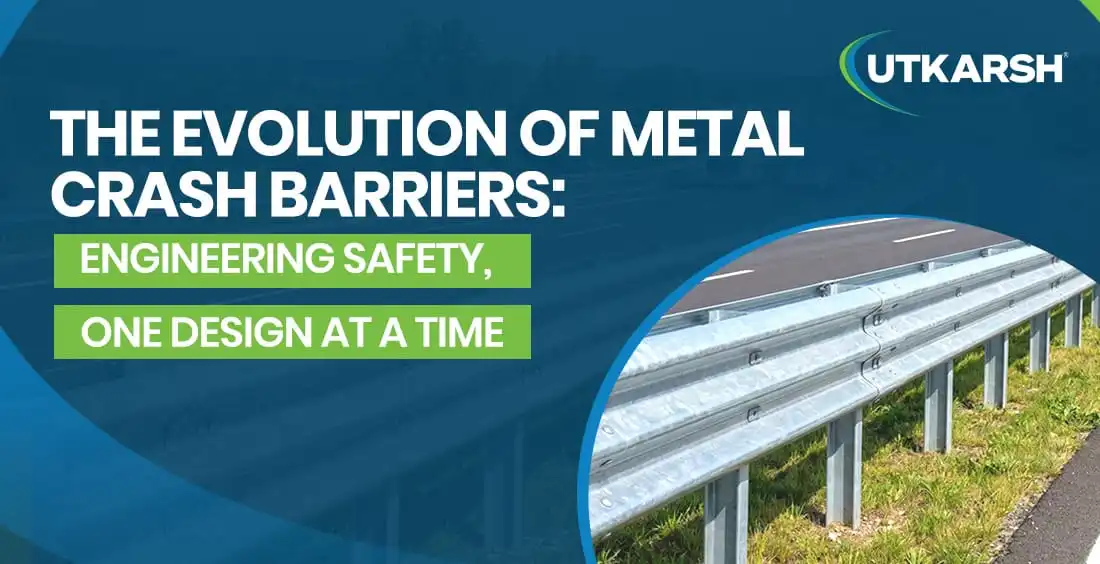
Road safety is often taken for granted until something goes wrong. Yet behind every safe journey lies decades of engineering evolution, testing, and learning from real world accidents. Among the most critical components of roadside safety infrastructure is the humble metal crash barrier. What started as a simple steel guardrail has transformed into a highly engineered safety system designed to absorb impact, redirect vehicles, and ultimately save lives.
This journey of evolution is not just about steel and design. It reflects how transportation itself has changed. Vehicles have become faster, heavier, and more complex. Highways have expanded, traffic density has increased, and expectations from safety systems have grown significantly. The metal crash barrier has evolved alongside these changes, adapting continuously to meet new challenges driven largely by innovations introduced by leading crash barrier manufacturers worldwide.
The Early Days of Roadside Protection
In the early stages of highway development, roadside safety measures were minimal. Roads were narrower, traffic volumes were lower, and vehicle speeds were relatively modest. Simple wooden rails or basic steel sections were sometimes used to prevent vehicles from leaving the roadway, but these were far from reliable.
As motorization increased, particularly in countries like the United States, the need for more effective roadside protection became evident. Accidents involving vehicles leaving the road and hitting rigid objects such as trees, poles, or embankments were common and often fatal. Engineers began exploring ways to create a system that could absorb kinetic energy rather than simply resist impact.
This led to the development of the first generation of steel guardrails, marking the beginning of modern metal crash barrier systems.
The Birth of the W Beam Crash Barrier
The 1970’s marked a significant milestone in the history of crash barriers with the development of the w metal beam crash barrier in the United States. This design quickly became the backbone of roadside safety systems across the world.
The W beam, named after its distinctive shape, was designed to provide a balance between strength and flexibility. It consisted of a corrugated steel beam mounted on posts, often with spacers to create offset from the posts. This configuration allowed the system to deform during impact, absorbing energy and redirecting the vehicle back onto the road.
For the vehicles of that era, which were lighter and slower compared to today's standards, the w metal beam crash barrier performed effectively. It reduced the severity of accidents and became a widely accepted solution across highways in North America, Europe, and later in developing countries.
However, as transportation evolved, limitations of the W beam system began to emerge.
The Challenge of Larger Vehicles
With economic growth and industrial expansion came an increase in commercial transportation. Trucks and buses became larger, heavier, and more frequent on highways. At the same time, vehicle speeds increased due to improved road infrastructure.
Under these new conditions, it was observed that traditional w metal beam crash barrier systems did not always perform adequately. Heavy vehicles could override or penetrate the barrier, leading to severe accidents. The energy involved in such impacts exceeded the capacity of a single W beam system.
Engineers recognized that a new approach was required to handle higher impact forces and contain larger vehicles more effectively—pushing crash barrier manufacturers to innovate further.
The Transition to Double W Beam Systems
One of the immediate solutions was to enhance the existing design by using two W beams instead of one. This configuration increased the height and strength of the barrier, providing better containment for larger vehicles.
The double W beam system improved performance by distributing impact forces across a larger section and increasing resistance to vehicle penetration.
However, this solution came with its own challenges including increased material consumption and cost.
The Emergence of the Thrie Beam Barrier
Engineers developed the thrie beam crash barrier to improve efficiency and performance. To understand the differences between W-beam and Thrie-beam crash barriers, one must consider their structural design and load-bearing capacity.
The thrie beam provides superior strength and stiffness, allowing better resistance and energy absorption.
The Role of Crash Testing and Standards
Standards such as EN 1317, MASH, and IRC guidelines define parameters like impact speed and vehicle type to ensure safety compliance.
Conclusion
The evolution of road safety barriers reflects continuous innovation driven by real-world challenges. From basic guardrails to advanced thrie beam crash barrier systems, each step has improved safety and performance.
Utkarsh India stands among the leading infrastructure companies, delivering high-quality crash barrier systems that meet global standards.
Also Read: All you Need to Know About the Different Types of Crash Barriers
FAQs
What is a metal crash barrier?
A roadside safety system designed to absorb impact and redirect vehicles.
Difference between W beam and thrie beam?
W beam is lighter; thrie beam offers higher strength and better performance.
Why thrie beam on highways?
Provides better containment and safety for high-speed traffic.
Who manufactures crash barriers in India?
Several certified manufacturers produce high-quality systems meeting global standards.
How long do metal crash barriers last?
Typically 15–25 years depending on conditions and maintenance.