

Role of Steel Structures in Electrical Power Distribution Systems
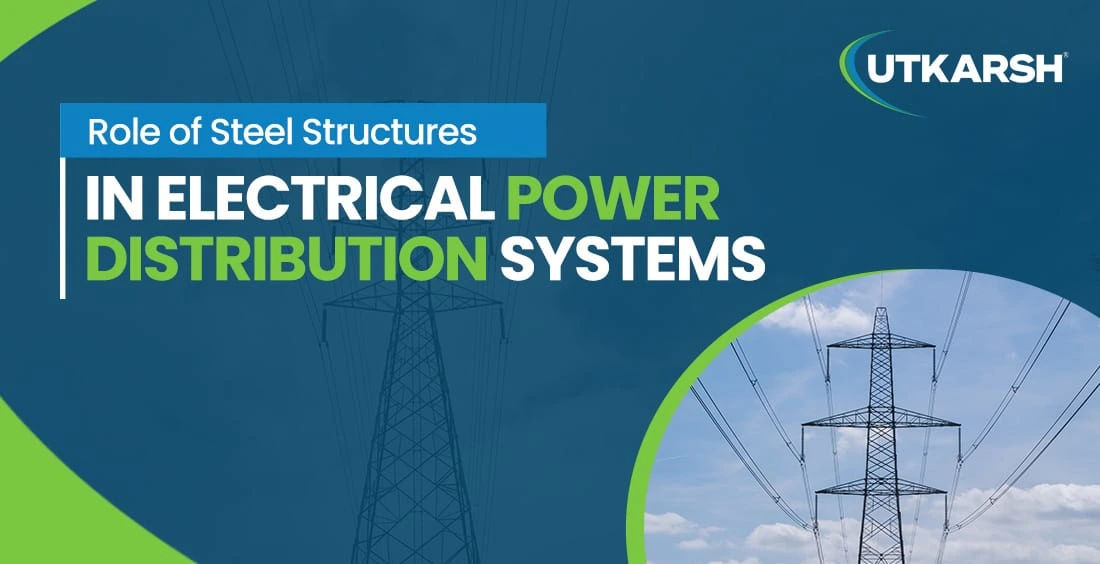
In modern nation building, energy management plays a key role in representing power. The efficiency of an electrical power distribution system determines the progress of a nation. As electricity travels from substations to residential, commercial, and industrial hubs, the physical infrastructure supporting these lines must be impeccable.
At Utkarsh India, we believe that the backbone of any resilient grid is its structural integrity. This is where the galvanized steel structure plays a transformative role, offering the durability and precision required for 21st-century transmission and distribution systems.
Why Steel Structures are Essential for Power Distribution Infrastructure
A power distribution infrastructure faces constant challenges: environmental corrosion, high wind speeds, and the mechanical stress of heavy conductors. Traditional materials like wood or concrete often succumb to these pressures, leading to frequent maintenance and grid instability.
1. Unmatched Structural Integrity
Steel provides a uniform material strength that is predictable and consistent. Unlike concrete, which can crack, or wood, which can rot, a galvanized steel structure offers high tensile strength. At Utkarsh India, our structures are engineered to withstand wind speeds of up to 300 km/hr, ensuring that the electrical power distribution system remains operational even during severe weather events.
2. Corrosion Resistance through Galvanization
The longevity of power infrastructure is primarily threatened by rust. Utkarsh India utilizes a meticulous hot-dip galvanization process, applying a protective zinc coating (65 μ to 86 μ) that meets international standards (BS EN ISO: 1461 / IS 4759). This ensures that our poles and towers remain maintenance-free for decades, even in high-humidity coastal regions or polluted industrial zones.
3. Optimized for Modern Load Demands
As power consumption rises, distribution networks must carry heavier conductors and more complex equipment. Steel tubular poles and towers offer a superior strength-to-weight ratio, allowing for longer span lengths and the ability to support twin, quad, or hex conductors with ease.
4. Safety and Ductility
Steel is inherently ductile. In the event of extreme mechanical stress, steel structures tend to bend rather than snap. This "fail-safe" characteristic prevents catastrophic collapses, protecting both the public and the surrounding power distribution infrastructure.
Utkarsh India’s Role in Strengthening the Grid
With over 40 years of expertise and a dedicated team of 100+ engineers, Utkarsh India Limited is a trusted leader in the infrastructure sector. Our range of solutions for transmission and distribution systems includes:
- Steel Tubular Poles: Customized for urban and rural electrification, providing a sleek yet robust alternative to traditional poles.
- Transmission Towers: Ranging from 66kV to 765kV, designed for single, double, and multi-circuit lines.
- Substation Structures: Precisely engineered to support high-voltage switches and transformers without voltage drops.
Get more insights: Role of Steel Transmission Poles in Expanding Power Infrastructure
Conclusion
The reliability of an electrical power distribution system is the literal engine of economic growth; without a steady flow of energy, industries stall and innovation stops. By integrating high-quality galvanized steel structures into the grid, utility providers do more than just hold up wires; they secure a stable, safe, and cost-effective energy future. These structures minimize downtime caused by environmental fatigue and reduce long-term capital expenditure through their sheer longevity.
At Utkarsh India, we recognize that the strength of the nation is reflected in the strength of its power distribution infrastructure. Through our commitment to engineering excellence and world-class manufacturing, we provide the foundational support that keeps the lights on, the factories running, and the economy moving forward.
FAQs
What are the main benefits of using steel in power distribution?
Steel offers a high strength-to-weight ratio, long-term durability through galvanization, and better resistance to environmental factors like high winds and seismic activity compared to wood or concrete.
Why is hot-dip galvanization important for distribution poles?
It creates a protective zinc barrier that prevents corrosion and rusting. This significantly extends the lifespan of the structure and reduces the need for frequent maintenance.
Can Utkarsh India customize structures for specific project needs?
Yes, Utkarsh India offers customized designs for steel tubular poles and transmission towers to meet specific load-bearing requirements, conductor types, and local environmental conditions.
Are these steel structures eco-friendly?
Absolutely. Steel is 100% recyclable. Furthermore, the longevity of galvanized steel means fewer resources are spent on replacements over the decades.