

Highway Safety in India: Key Challenges and Infrastructure Solutions
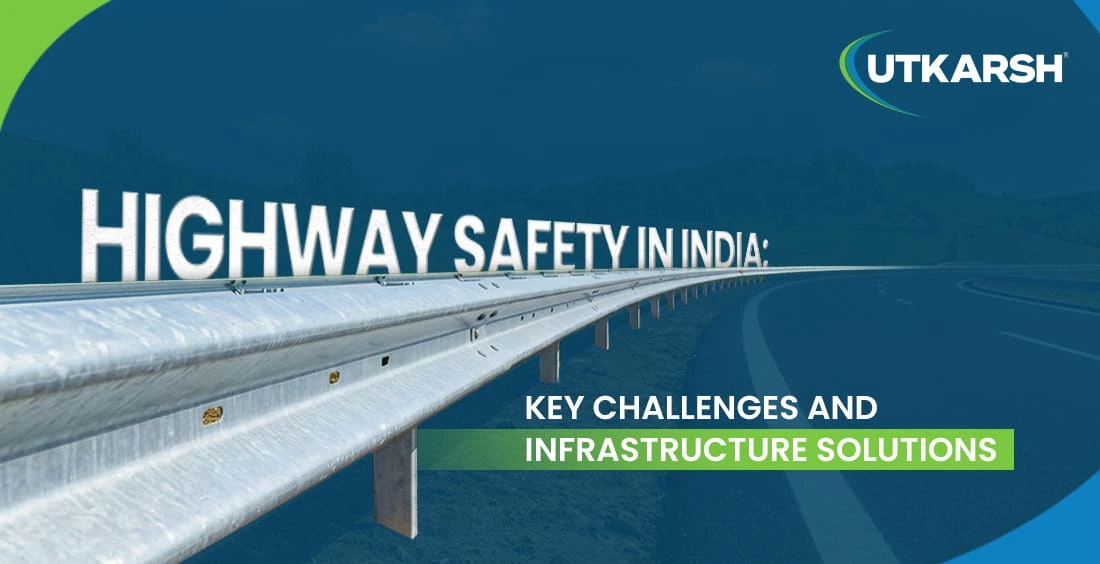
India possesses the second-largest road network in the world. While these highways are the lifelines of our economy, they also present a sobering reality: India accounts for one of the highest rates of road accidents globally. Ensuring highway safety is no longer just a policy goal; it is a national necessity.
As a leader in road safety infrastructure, Utkarsh India is committed to bridging the gap between rapid road expansion and commuter safety. In this article, we explore the primary challenges of highway safety in India and the transformative infrastructure solutions that are saving lives.
The Growing Challenges of Highway Safety in India
Highways and expressways are designed for speed, but speed without safety becomes a hazard. Several factors contribute to the risks on Indian roads:
- High-Speed Collisions: As vehicle speeds increase on modern expressways, the impact of a collision becomes far more lethal.
- Low Visibility: Foggy weather, heavy rain, and inadequate lighting on long stretches of highway frequently lead to pile-ups.
- Inadequate Pedestrian Safety: In many developing areas, pedestrians often cross highways abruptly, leading to fatal accidents in high-traffic zones.
- Vehicle Run-offs: Vehicles losing control and veering off the road or into the opposite lane are a major cause of fatalities.
Infrastructure Solutions: The Pillars of Highway Safety
To combat these challenges, the focus has shifted toward forgiving infrastructure road designs that minimise the consequences of human error.
1. Advanced Road Safety Barriers
Road safety barriers are the first line of defence. Crash barriers are engineered to absorb the impact energy of a crashing vehicle, redirecting it back onto the road or bringing it to a safe stop, helping in effective crash impact reduction.
Road safety barriers are the first line of defence.
- W-Beam Crash Barriers: The most common type of longitudinal barrier, ideal for preventing vehicles from moving out of the right of way.
- Thrie Beam Crash Barriers: Featuring a triple-corrugated design, these provide higher strength and are used in high-risk areas like sharp curves and steep embankments.
- Pedestrian Guard Rails: These separate high-speed traffic from foot traffic, ensuring pedestrians do not wander into dangerous zones.
Also Read: The Role of Pedestrian Guardrails in Safe Highway and Flyover Construction
2. Illumination and Visibility
A significant portion of highway fatalities occurs after sunset. Proper highway safety measures must include robust lighting solutions.
- High Mast Lighting: Essential for junctions and interchanges, providing uniform light over a large area.
- Octagonal and Steel Tubular Poles: These hold street lights that provide consistent visibility, giving drivers enough time to react to hazards.
3. Traffic Support Structures
Infrastructure isn't just about barriers; it's about information. Gantry structures and signage masts play a critical role in guiding drivers, providing speed warnings, and identifying exits well in advance.
Why Utkarsh India is a Trusted Partner in Road Safety
As one of the premier road safety product manufacturers in India , Utkarsh India Limited brings 40 years of expertise to the table. Our solutions are designed to meet rigorous national and international standards (MORTH, AASHTO, and EN).
- Durability: Our products undergo a single-dip seven-tank galvanisation process , ensuring a design life of over 25 years even in harsh weather.
- Engineering Excellence: With a team of 100+ engineers, we provide custom-engineered solutions for diverse terrains, from the plains of Haryana to the hills of Jammu & Kashmir.
- Scale: We have safeguarded over 40,000+ KM of roads across India, contributing to iconic projects like the Trans-Haryana Expressway.
Conclusion
Improving highway safety in India requires a multi-pronged approach combining strict enforcement of traffic laws with world-class road safety infrastructure. As the nation rapidly expands its expressway network, the margin for error diminishes; therefore, the quality of materials protecting our commuters must be uncompromising. By investing in high-quality road safety barriers and advanced lighting systems, we can move toward a future where Indian highways are not just fast, but fundamentally safe.
Utkarsh India Limited stands at the forefront of this mission. With four decades of expertise as a premier manufacturer of galvanised steel products, Utkarsh provides the backbone of Indian road safety. From W-Beam Crash Barriers designed to absorb high-velocity impacts to high-mast lighting systems that ensure crystal-clear visibility during night-time transit, Utkarsh products are engineered to meet stringent international and national safety standards. When infrastructure is built with Utkarsh, it isn't just built to last, it's built to save lives.
FAQs
1. What are the main types of crash barriers used in India?
The most common types are Metal Beam Crash Barriers, specifically the W-Beam and Thrie Beam. W-beams are used for general highway stretches, while Thrie beams are used in high-impact zones like bridges and curves.
2. Why is galvanisation important for road safety products?
Galvanisation involves a protective zinc coating that prevents rust and corrosion. This is vital for highway infrastructure, which is constantly exposed to rain, humidity, and extreme temperatures.
3. How do pedestrian barriers help on highways?
Pedestrian guard rails act as a physical deterrent, preventing people from crossing high-speed traffic lanes at unauthorised points, thereby reducing "run-over" accidents.