

Types of Road Safety Barriers & Where Each Works Best
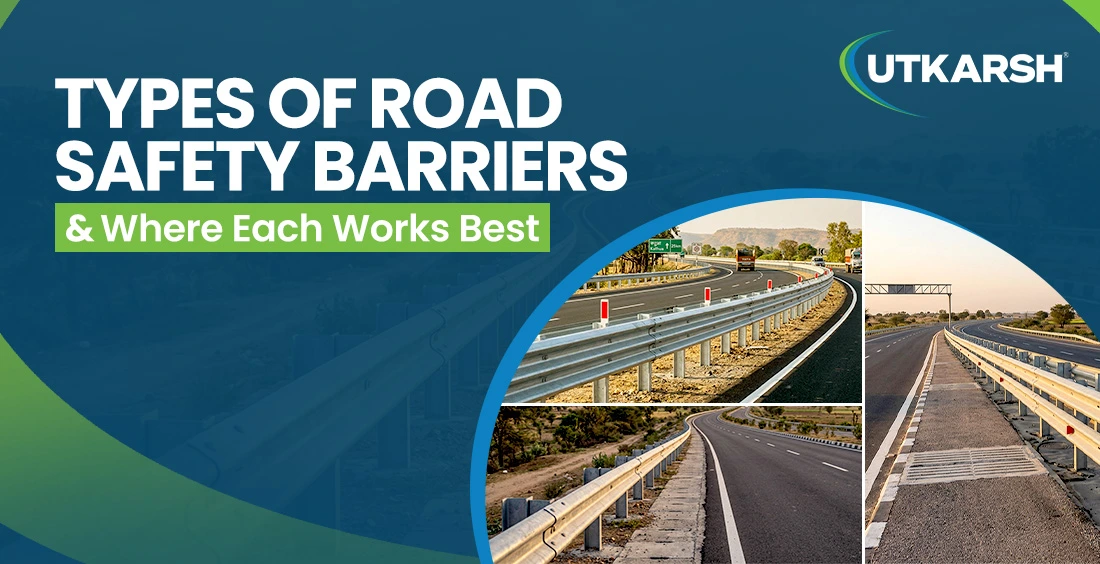
India has one of the largest road networks in the world, connecting cities, industries, and communities across more than 6.7 million kilometres. However, this vast network also witnesses a staggering number of road accidents every year. According to the Ministry of Road Transport and Highways (MoRTH), India recorded over 4.8 lakh road accidents, resulting in nearly 1.73 lakh fatalities in a single year. This translates to almost 474 deaths every day, making road safety one of the country's most pressing infrastructure challenges.
While responsible driving and stricter traffic enforcement are essential, road engineering plays an equally significant role in reducing accident severity. Well-designed road safety barriers can prevent vehicles from veering off roads, crossing into opposing lanes, or colliding with roadside structures. In many cases, they are the critical difference between a survivable accident and a fatal one.
Today's transportation infrastructure goes beyond conventional guardrails. From highways and expressways to pedestrian walkways, railway crossings, and urban corridors, different safety systems are engineered to address unique challenges. Understanding the types of road safety barriers and their intended applications helps infrastructure planners, contractors, and project authorities choose the right solution for every environment.
This guide explores the major types of road safety barriers used across India's transportation network and explains where each one performs best.
Why Road Safety Barriers are More Than Just Guardrails
1. Metal Crash Barriers
Among all types of road safety barriers, metal crash barriers remain the most widely used solution for highways, bridges, flyovers, and high-speed roads. Manufactured from high-strength galvanized steel, these barriers are engineered to withstand heavy impact while safely redirecting errant vehicles back onto the roadway.
Unlike rigid concrete barriers, metal crash barriers are designed with controlled flexibility. During a collision, they absorb a significant portion of the impact energy, reducing the force transferred to both the vehicle and its occupants. This energy-absorbing characteristic has made them the preferred choice for national highways, expressways, industrial corridors, and critical infrastructure projects across India.
Also Read: Highway Safety in India: Key Challenges and Infrastructure Solutions
Depending on traffic conditions and containment requirements, metal crash barriers are broadly classified into Thrie Beam and W Beam systems.
Thrie Beam Crash Barrier
The Thrie Beam Crash Barrier features a three-wave corrugated steel profile that offers greater rigidity and impact resistance than conventional guardrail systems. Designed for high-containment applications, it effectively absorbs collision energy and redirects vehicles back onto the roadway, reducing the severity of accidents. Its robust galvanized steel construction also ensures excellent corrosion resistance and long-term durability in demanding environments.
Thrie Beam Barriers are Best Suited for:
- National highways and expressways, where vehicles travel at high speeds.
- Bridges and flyovers, requiring enhanced vehicle containment.
- Mountain roads and sharp curves, where the risk of vehicles leaving the roadway is higher.
- Heavy commercial vehicle corridors, offering improved crash performance for larger vehicles.
- Median installations, helping prevent crossover collisions.
W Beam Crash Barrier
The W Beam Crash Barrier is one of the most widely used highway safety barriers due to its economical design and reliable performance. Its two-wave corrugated steel profile provides controlled flexibility during impact, allowing it to absorb collision forces while safely redirecting vehicles. This makes it an ideal solution for roads with moderate to heavy traffic.
W Beam Barriers are Commonly Installed in:
- State highways and district roads.
- Urban roads and city bypasses with mixed traffic conditions.
- Flyovers and service roads, where edge protection is essential.
- Industrial zones and logistics parks, ensuring safer vehicle movement.
- Road medians, reducing the chances of head-on collisions.
2. Pedestrian Barrier
While highways are primarily designed for vehicles, urban roads must safely accommodate both motorists and pedestrians. Uncontrolled pedestrian movement near busy intersections, schools, hospitals, and transit hubs often increases the risk of accidents. Pedestrian barriers are designed to create a physical separation between vehicular traffic and walkways, guiding people towards designated crossing points and preventing unsafe road crossings. These barriers not only improve pedestrian safety but also contribute to smoother traffic flow by reducing sudden interruptions caused by jaywalking.
Pedestrian Barriers are Commonly Installed at:
- Schools and educational institutions to ensure the safety of students during peak hours.
- Hospitals and healthcare facilities, where controlled pedestrian movement is essential.
- Metro stations, railway stations, and bus terminals to manage large volumes of commuters.
- Commercial districts and marketplaces, helping organise pedestrian traffic.
- Public parks, footpaths, and urban intersections, reducing the likelihood of accidents and enhancing overall road discipline.
3. Noise Barrier
As urban development continues to expand alongside highways and expressways, traffic noise has become a growing environmental concern. Continuous exposure to high noise levels can impact the quality of life for nearby residents, schools, hospitals, and commercial establishments. Noise barriers are specially engineered structures that help reduce sound transmission from busy roads while complementing modern transportation infrastructure. Besides improving acoustic comfort, they also enhance the visual appeal of highways and support sustainable urban planning.
Noise Barriers are Ideal For:
- Residential neighbourhoods located adjacent to highways and expressways.
- Hospitals and educational institutions, where quieter surroundings improve comfort and concentration.
- Urban flyovers and elevated corridors, helping minimise traffic noise in densely populated areas.
- Metro and railway corridors, reducing operational noise for nearby communities.
- Industrial and commercial zones, creating a more comfortable working environment.
Conclusion
As India's transportation network continues to expand, investing in the right types of road safety barriers has become essential for building safer and more resilient road infrastructure. Whether it's protecting high-speed highways with Metal Crash Barriers, safeguarding pedestrians in busy urban areas, reducing noise pollution near residential communities, securing railway corridors, or improving visibility through robust street light poles, every safety solution plays a vital role in reducing accident risks and enhancing road user safety.
Utkarsh India, proudly known as the best infrastructure company in India, offers a comprehensive portfolio of high-quality road safety infrastructure solutions, including Metal Crash Barriers (Thrie Beam and W Beam), Pedestrian Barriers, Noise Barriers, and Railway Crash Barriers. Engineered using premium-grade steel and manufactured in accordance with national and international quality standards, these solutions are designed to deliver exceptional durability, corrosion resistance, and reliable performance across highways, bridges, industrial corridors, smart cities, and railway infrastructure projects. With decades of manufacturing expertise and a commitment to infrastructure excellence, Utkarsh India continues to support safer roads and stronger transportation networks across the country.
FAQs
1. What are the main types of road safety barriers?
The major types of road safety barriers include Metal Crash Barriers (Thrie Beam and W Beam), Pedestrian Barriers, Noise Barriers, Railway Crash Barriers, and Street Light Poles that collectively enhance road safety and traffic management.
2. What is the difference between Thrie Beam and W Beam crash barriers?
Thrie Beam crash barriers have a three-wave steel profile that offers higher containment and impact resistance, making them suitable for high-speed highways and heavy vehicle traffic. W Beam barriers feature a two-wave profile and are widely used on highways, urban roads, and flyovers for standard containment requirements.
3. Why are steel road barriers preferred for highways?
Steel road barriers provide excellent strength, impact absorption, corrosion resistance, and long service life. They effectively redirect vehicles during collisions, reducing accident severity while requiring minimal maintenance.
4. Where are pedestrian barriers commonly installed?
Pedestrian barriers are typically installed near schools, hospitals, metro stations, railway stations, bus terminals, commercial areas, and public walkways to guide pedestrian movement and improve safety.
5. How do noise barriers contribute to road infrastructure?
Noise barriers reduce traffic-generated noise in nearby residential areas, schools, hospitals, and commercial zones, creating quieter and more comfortable surroundings while complementing modern highway infrastructure.
6. Why are street light poles considered part of road safety infrastructure?
Street light poles improve visibility during nighttime and adverse weather conditions, helping drivers identify road signs, intersections, and hazards more easily, thereby reducing the risk of accidents.