

Is there a price difference between solar street light poles and traditional ones?
Street lighting is an essential part of modern infrastructure, supporting road safety, public security, and urban development. As cities, highways, industrial parks, and rural areas continue to expand, selecting the right street light pole has become an important long-term investment rather than simply a construction decision.
With the growing focus on sustainable infrastructure, solar-powered lighting systems are increasingly being adopted alongside conventional street lighting. While the initial investment may differ, the overall value depends on installation, operating expenses, maintenance, and service life.
Understanding these differences helps project developers, municipalities, and contractors choose the most suitable solution for their infrastructure requirements.
Understanding the Difference Between Solar and Traditional Street Light Poles
Traditional street light poles are connected to the electrical grid through underground cables and external power infrastructure. Their primary function is to support lighting fixtures while ensuring structural stability over decades of service.
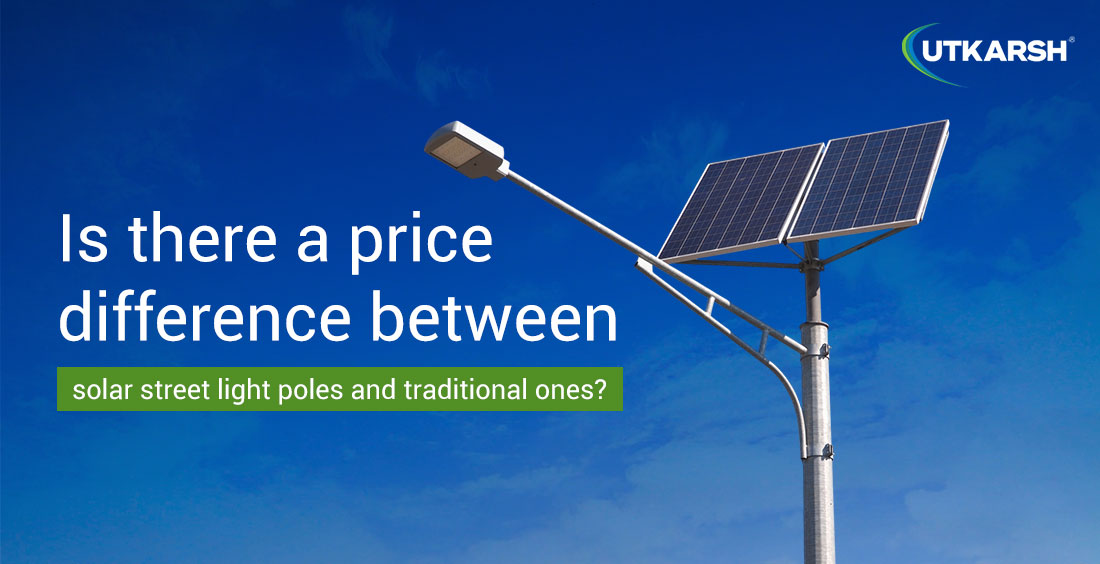
Solar street light poles, on the other hand, are designed to accommodate additional components such as solar panels, batteries, controllers, and LED luminaires. These integrated systems generate and store electricity independently, reducing reliance on the conventional power grid.
The additional engineering requirements contribute to differences in pricing.
Get Insights On: Common Maintenance Requirements For Street Light Poles
Initial Investment
One of the biggest differences lies in the upfront cost.
Solar street light poles generally require a higher initial investment because they include:
- Solar panels
- Battery storage systems
- Smart controllers
- Energy-efficient LED lighting
- Stronger structural designs to support additional equipment
Traditional street light poles have a comparatively lower purchase price since they primarily support lighting fixtures and electrical wiring.
Although the initial cost is lower, it represents only one part of the total project expenditure.
Installation Costs
Installation costs often influence the overall project budget as much as the product itself.
Traditional street lighting systems require:
- Underground cable laying
- Trenching
- Electrical connections
- Grid connectivity
- Restoration of roads or pavements after installation
These activities increase labour requirements, project timelines, and material costs.
Solar street light poles eliminate most of these requirements. Since they operate independently of the electrical grid, installation is generally faster and less disruptive. This makes them particularly suitable for remote locations, highways, industrial sites, parks, and rural developments where extending electrical infrastructure may be expensive.
Long-Term Maintenance Costs
Maintenance is another important factor when comparing the two systems.
Traditional street lighting infrastructure requires periodic inspection of electrical wiring, underground cables, distribution systems, and power connections. Over time, corrosion, moisture, voltage fluctuations, and cable damage can lead to repairs that increase operating costs.
Solar street light poles have fewer electrical components connected to external infrastructure, reducing the likelihood of wiring-related failures. Routine maintenance mainly involves cleaning solar panels, inspecting batteries, and checking lighting performance.
Over the lifespan of the installation, lower maintenance requirements can help offset the higher initial investment.
Energy Savings
One of the biggest financial advantages of solar street lighting is the reduction in electricity expenses.
Traditional street lighting depends entirely on grid electricity throughout its operational life, leading to recurring utility costs.
Solar-powered systems generate electricity using renewable energy, significantly reducing operating expenses while supporting sustainability goals. For large infrastructure projects, these savings become increasingly valuable over time.
Durability and Structural Performance
Whether solar-powered or conventionally powered, the quality of the street light pole remains critical.
High-quality poles are manufactured using corrosion-resistant steel and hot-dip galvanisation to withstand challenging environmental conditions such as heavy rainfall, strong winds, humidity, and temperature fluctuations.
A durable street light pole requires fewer repairs, offers a longer service life, and delivers better value throughout the project lifecycle.
Choosing the Right Street Light Pole Supplier
Selecting the right supplier is just as important as choosing the lighting system itself. Reliable street light pole suppliers offer engineering expertise, quality-certified manufacturing, customisation options, and products that comply with recognised industry standards.
The right supplier also provides technical support, ensuring that each pole is designed according to site-specific wind loads, lighting requirements, and project specifications.
Why Choose Utkarsh India?
Recognised as the best infrastructure company in India, Utkarsh India manufactures high-quality street light poles designed for urban infrastructure, highways, industrial projects, and public utilities.
The company offers poles starting from 3 metres in height with complete customisation based on project requirements. Manufactured using advanced production technologies and strict quality control processes, the poles are engineered to withstand wind speeds of up to 300 km/h while delivering long-term structural reliability.
With proven manufacturing expertise and compliance with industry standards, Utkarsh India continues to support infrastructure projects across India with dependable street lighting solutions.
Conclusion
While solar street light poles typically involve a higher upfront investment, they often provide long-term savings through lower installation costs, reduced maintenance requirements, and minimal electricity expenses. Traditional street lighting remains a practical option where existing electrical infrastructure is readily available.
The right choice ultimately depends on project location, operational requirements, lifecycle costs, and future sustainability goals. Partnering with experienced street light pole suppliers ensures that infrastructure projects receive durable, efficient, and cost-effective lighting solutions designed for long-term performance.
FAQs
1. Why are solar street light poles more expensive than traditional street light poles?
Solar street light poles have a higher initial cost because they include additional components such as solar panels, batteries, LED luminaires, and controllers. However, they can reduce long-term operating and electricity costs.
2. Which is more cost-effective in the long run: solar or traditional street light poles?
While traditional street light poles are generally less expensive to purchase, solar street light poles often offer better long-term value due to lower installation, maintenance, and energy costs.
3. What should I consider when choosing street light pole suppliers?
Look for street light pole suppliers that offer quality-certified products, customisation options, compliance with industry standards, corrosion-resistant materials, and strong technical support for installation and maintenance.