

Noise Barrier Design Standards for Highway Projects: Key Specifications and Design Considerations
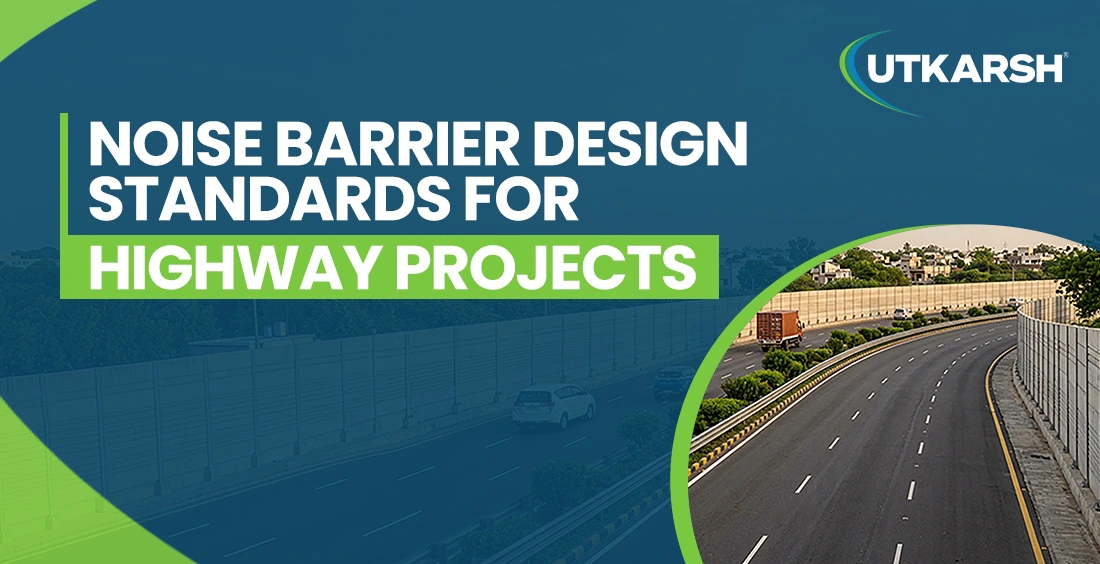
Highway development improves connectivity, but it can also increase traffic noise for communities located near busy roads, expressways and urban corridors. Continuous exposure to road traffic noise can affect residential comfort, sleep quality and the overall environmental quality of nearby areas. This is why noise barriers have become an important part of modern highway and infrastructure projects.
However, installing a barrier is not simply a matter of placing a wall beside a road. Effective performance depends on several factors, including barrier height, acoustic performance, material selection, wind resistance, structural design, joint sealing and installation quality. A properly engineered highway sound barrier must therefore meet both acoustic and structural requirements.
This article explains the key noise barrier specifications, design standards and technical considerations that project owners, consultants and highway authorities should evaluate when selecting an acoustic barrier system.
What are Noise Barriers?
Noise barriers are specially designed structures installed between a noise source and a receiver to reduce the transmission of unwanted sound. In highway projects, the primary source is usually traffic generated by cars, buses, trucks and other vehicles.
A barrier works primarily by interrupting the direct path between the road and the noise-sensitive area. When sound waves encounter the barrier, the direct line of sound transmission is blocked, causing the sound to travel over the top or around the ends of the structure. This change in the sound path can reduce the noise reaching the protected area.
A highway noise barrier may be installed near:
- Residential buildings
- Schools and educational institutions
- Hospitals and healthcare facilities
- Commercial areas
- Offices and business parks
- Wildlife-sensitive zones
- Urban settlements located close to expressways and highways
The design must be based on the specific site conditions rather than using the same barrier configuration for every project.
Why Is Noise Barrier Design Important in Highway Projects?
The effectiveness of a noise barrier depends heavily on its design. A barrier that is too short may allow sound to pass over it easily. Similarly, gaps between panels or poorly sealed joints can create paths for noise leakage.
The main design objectives of a highway noise barrier are to:
- Reduce traffic noise reaching nearby receptors
- Maintain structural stability under wind and other environmental loads
- Provide long-term resistance to weather and UV exposure
- Prevent sound leakage through joints and connections
- Integrate with highway safety and maintenance requirements
- Maintain visibility where required by the project
- Provide a durable and aesthetically suitable solution
A good acoustic barrier design must therefore combine acoustical engineering with structural and material engineering.
Key Noise Barrier Design Standards and Specifications
The following specifications are important for transparent polycarbonate noise barrier systems used in highway projects.
| Parameter | Specification |
|---|---|
| Height | 1.5 m to 2 m |
| Polycarbonate Sheet thickness | 8 mm, 10 mm, 12 mm and 16 mm |
| Wind Load Design | Designed as per IS 875 Part III, 1987 specification |
| Sound Proofing | Class A4 |
| Facing Sheet | Solid or multiwall polycarbonate sheet |
| Surface Protection | UV-coated |
| Gasket | Neoprene rubber gaskets at joints |
| Vertical Post | H-profile or hollow rectangular pipe section |
| Panel Installation | Acoustic panels slide longitudinally into vertical posts |
| Finish | Galvanised, powder-coated or painted metallic surfaces in the desired shade |
How Does a Highway Sound Barrier Work?
A highway sound barrier works by changing the path through which traffic noise travels.
Without a barrier, sound waves travel directly from the source to the receiver. When a barrier is installed, the direct path is blocked. The sound must then travel over the top of the barrier or around its ends.
The amount of noise reduction depends on the difference between:
- The direct sound path, and
- The path that travels over the barrier
This is commonly associated with the path difference created by the barrier.
In practical terms, a barrier is generally more effective when:
- It is high enough to block the direct line of sight
- It is long enough to prevent sound travelling around the ends
- It is installed close to the noise source or receiver
- It has no significant gaps
- Its acoustic performance is suitable for the project requirement
Therefore, simply installing a visually attractive wall does not guarantee effective noise reduction.
Important Factors in Acoustic Barrier Design
1. Source-Receiver Relationship
The position of the road and the protected receiver must be studied before selecting the barrier height and location.
For example, a barrier may need a different design when protecting:
- A ground-level residential area
- A multi-storey apartment building
- A school located beside an elevated highway
- A hospital close to a flyover
The receiver height can significantly influence the effectiveness of a barrier.
2. Barrier Length
A short barrier may allow sound to travel around its ends. For this reason, the barrier should generally extend sufficiently beyond the area that requires protection.
The required length depends on:
- Road geometry
- Location of sensitive receptors
- Traffic noise source
- Topography
- Required noise reduction
The length should be established through project-specific acoustic assessment.
3. Gaps and Openings
A continuous acoustic barrier should avoid unnecessary openings.
Potential sound leakage points include:
- Panel joints
- Gaps beneath panels
- Gaps between the barrier and structures
- Openings around posts
- Inadequately sealed access points
This is why the use of suitable joint gaskets and proper installation practices is essential.
4. Road and Terrain Profile
The road may be:
- At ground level
- Elevated
- In a cutting
- On an embankment
- Located on a gradient
The surrounding terrain changes the way sound propagates. An acoustic barrier design should therefore consider the relative elevations of the road, barrier and receiver.
5. Traffic Composition
Heavy vehicles such as trucks and buses can contribute significantly to road traffic noise. Traffic volume, speed and vehicle composition should be considered when evaluating the need for a highway sound barrier.
A highway with a high percentage of heavy vehicles may require a different acoustic solution compared with a lower-speed road carrying mostly light vehicles.
Transparent Polycarbonate Noise Barriers: Key Advantages
Transparent barriers are particularly useful where visibility and noise control must be achieved together.
Their key advantages include:
Maintains Visibility
Transparent polycarbonate panels can help maintain visual openness along highways, bridges and urban road corridors.
High Impact Resistance
Polycarbonate is known for its impact-resistant characteristics, making it suitable for demanding outdoor applications when appropriately designed and installed.
Improved Visual Integration
A transparent barrier can reduce the visually enclosed appearance sometimes associated with solid walls.
UV Protection
UV-coated panels are better suited for long-term outdoor exposure.
Modular Installation
Panels installed within vertical support profiles can simplify construction and maintenance.
Noise Barrier Design: Common Mistakes to Avoid
Even a high-quality acoustic panel may fail to deliver the expected performance if the overall system is poorly designed.
Common mistakes include:
- Selecting barrier height without studying receiver elevation
- Ignoring the required barrier length
- Leaving gaps between panels
- Using inadequate joint sealing
- Underestimating wind loads
- Focusing only on sheet thickness
- Failing to account for maintenance access
- Ignoring corrosion protection for metallic components
- Using a standard design without a site-specific assessment
A successful project requires coordination between acoustic, structural and civil engineering considerations.
Conclusion
Effective highway noise barriers require the right balance of acoustic performance, structural stability, durability and installation quality. From selecting the appropriate polycarbonate thickness and height to ensuring proper joint sealing, UV protection and wind-load resistance, every component contributes to long-term performance.
As an experienced infrastructure solutions provider, Utkarsh India, the best infrastructure company in India, offers engineered noise barrier systems designed to meet the diverse requirements of highway and infrastructure projects. Its solutions include transparent polycarbonate panels, robust support profiles, UV protection, and sealed joints for effective noise control and durability. Beyond noise barriers, Utkarsh India also manufactures pedestrian barriers and railway crash barriers, offering a wider range of safety and infrastructure solutions for demanding projects.
With its focus on quality manufacturing, application-specific engineering and dependable infrastructure solutions, Utkarsh India supports projects that require performance, safety and long-term reliability.
Frequently Asked Questions
1. What are noise barriers used for in highway projects?
Noise barriers are used to reduce the transmission of traffic noise from highways, expressways and other busy roads to nearby residential, commercial and sensitive areas.
2. What is the standard height of the specified noise barrier?
The specified noise barrier system is available in heights ranging from 1.5 metres to 2 metres. The final height should be selected according to the project’s acoustic and structural requirements.
3. What thicknesses are available for polycarbonate noise barrier sheets?
The available polycarbonate sheet thicknesses are 8 mm, 10 mm, 12 mm and 16 mm.
4. How are highway noise barriers designed for wind loads?
The specified system is designed with reference to IS 875 Part III, 1987. The applicable current code edition and project requirements should be verified by the responsible structural designer before final approval.