

Inspection Checklist for Long-Term Flag Mast Pole Safety
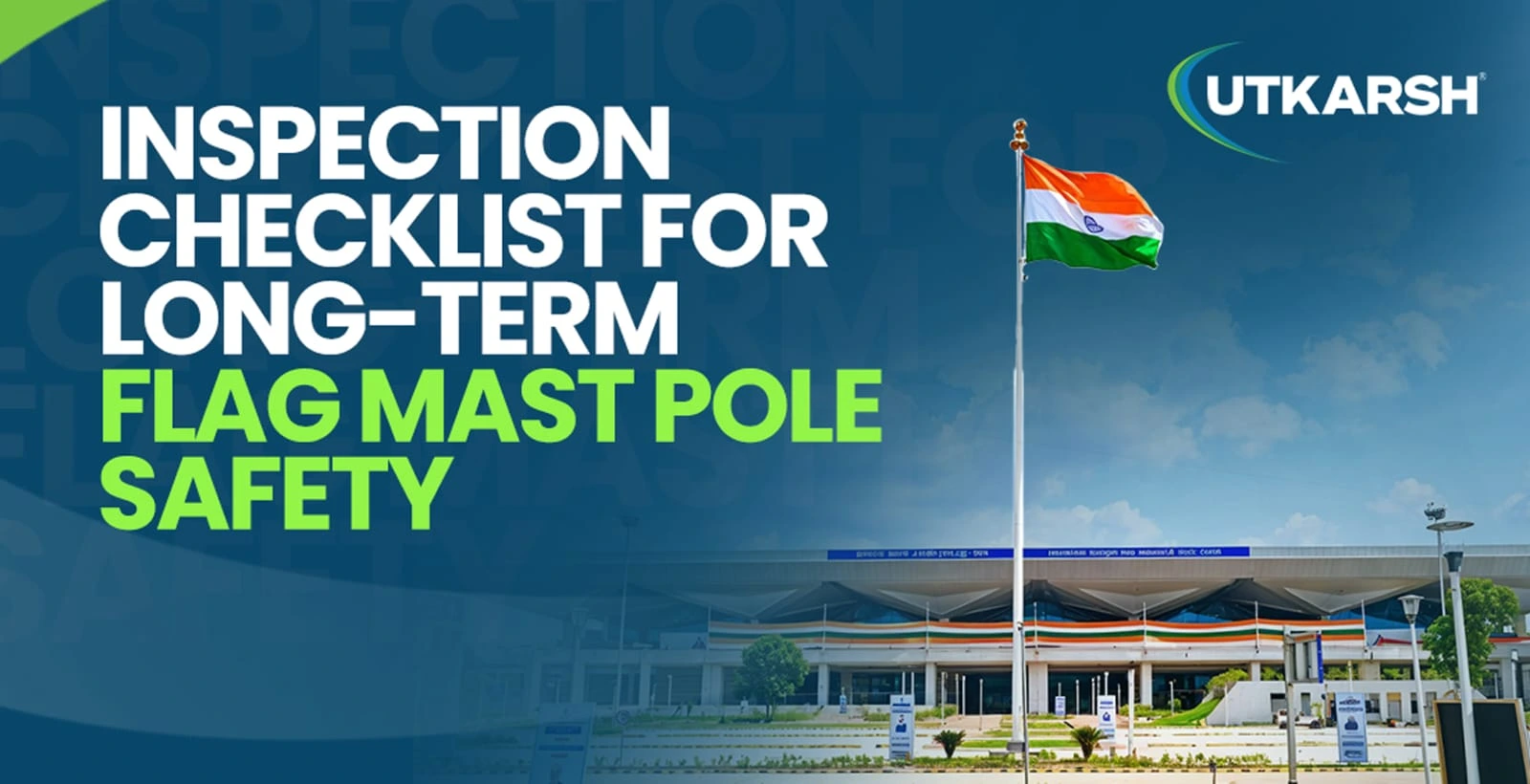
A flag mast pole is more than just a vertical steel structure - it is a symbol of pride, identity, and institutional integrity. Whether installed at industrial facilities, government buildings, corporate headquarters, or public spaces, the structural safety of flag mast poles is critical for long-term performance and public safety.
Over time, environmental exposure, wind loads, corrosion, and material fatigue can compromise stability. That’s why a systematic flag pole safety inspection and a structured inspection checklist for flag poles are essential for ensuring durability and compliance with both national and international standards. Installing high-quality, durable flag mast poles for strength and stability further enhances long-term performance by ensuring the structure is engineered to withstand environmental stresses and maintain structural reliability.
At Utkarsh India, every flag mast pole is engineered, manufactured, and inspected following strict quality benchmarks aligned with global best practices.
Why Structural Safety of Flag Mast Poles Matters
A flag mast pole is constantly exposed to:
- High wind pressure
- Corrosive environments (coastal, industrial, high-humidity zones)
- Dynamic loading due to flag movement
- Temperature fluctuations
Failure to conduct periodic inspections may result in:
- Structural instability
- Base plate damage
- Anchor bolt loosening
- Risk to public safety
A preventive inspection approach ensures extended service life and minimal maintenance costs.
Comprehensive Inspection Checklist for Flag Mast Poles
Below is a detailed inspection checklist for flag poles designed to ensure structural safety and longevity.
1. Foundation and Base Plate Inspection
Concrete Foundation
- Check for cracks or settlement in the concrete base
- Ensure no water accumulation around foundation
- Verify alignment and leveling
Anchor Bolts
- Inspect for corrosion
- Check torque tightness
- Look for elongation or thread damage
Base Plate
- Examine weld integrity
- Inspect for rust formation
- Confirm uniform load transfer
At Utkarsh India, foundation design follows structural engineering calculations based on wind load analysis and soil conditions, ensuring long-term performance.
2. Pole Shaft Structural Inspection
Surface Condition
- Look for corrosion, pitting, or peeling galvanization
- Check paint or coating degradation
Welded Joints
- Inspect for cracks or discontinuities
- Perform visual and NDT (Non-Destructive Testing)
Straightness & Alignment
- Check vertical alignment using plumb testing
- Look for bending due to excessive wind load
Utkarsh India manufactures flag mast poles using high-grade steel and advanced galvanization processes to enhance structural safety and corrosion resistance.
3. Corrosion Protection Check
Corrosion is one of the biggest threats to the structural safety of flag mast poles.
Hot-Dip Galvanization
- Verify uniform coating thickness
- Inspect for coating flaking or peeling
Protective Coatings
- Check epoxy or PU coating integrity (if applied)
- Identify early rust spots
Utkarsh India follows internationally recognized galvanization practices aligned with global quality benchmarks to ensure maximum lifespan in diverse environments.
4. Wind Load & Structural Stability Review
A critical aspect of flag pole safety inspection is ensuring wind load compliance.
Design Wind Speed Verification
- Confirm pole designed as per regional wind zone
- Inspect for structural fatigue
Vibration Monitoring
- Check excessive oscillation
- Inspect damping mechanisms (if installed)
Utkarsh India engineers flag mast poles considering wind load calculations compliant with Indian and international structural design frameworks.
5. Internal Components & Mechanisms
For high-mast or mechanized flag mast poles:
Pulley System
- Inspect pulley wear and alignment
- Ensure smooth rotation
Rope & Fasteners
- Check rope strength and fraying
- Inspect shackle tightness
Motorized Systems (If Applicable)
- Test operational efficiency
- Inspect electrical safety components
Regular inspection prevents operational failure during ceremonial or high-visibility events.
6. Lightning Protection & Grounding
Tall flag mast poles are vulnerable to lightning strikes.
Earthing System
- Check grounding resistance
- Inspect earthing strip corrosion
Lightning Arrestor
- Ensure secure installation
- Inspect connection integrity
Utkarsh integrates grounding provisions as per electrical safety standards to enhance operational safety.
7. Periodic Maintenance Schedule
To ensure long-term performance, follow this recommended schedule:
| Inspection Type | Frequency |
|---|---|
| Visual Inspection | Every 3–6 months |
| Structural Safety Audit | Annually |
| Corrosion & Coating Check | Every 12 months |
| Anchor Bolt Torque Check | Every 6 months |
Also Read: Frequently Asked Questions on Flag Poles: Answered by the Leading Manufacturer
National & International Compliance Followed by Utkarsh India
Utkarsh India ensures:
- Structural design as per Indian wind load and steel structure codes
- Quality steel sourcing meeting international standards
- Controlled galvanization process for corrosion protection
- Rigorous internal quality inspection before dispatch
Each flag mast pole undergoes dimensional verification, material testing, and load-based structural validation to ensure full compliance with both national and international benchmarks.
Signs That Indicate Immediate Inspection
You should conduct an urgent flag pole safety inspection if you notice:
- Visible leaning
- Rust streaks at base
- Unusual vibration during high wind
- Loose anchor bolts
- Noise from pulley systems
Early detection prevents structural failure.
Best Practices for Long-Term Safety
- Always install on engineered foundation
- Conduct periodic inspection checklist for flag poles
- Use high-quality galvanized steel
- Follow certified installation practices
- Document inspection reports
Utkarsh India emphasizes lifecycle safety - from design and manufacturing to installation guidance and post-installation inspection protocols.
Summary
A flag mast pole represents national pride and organizational identity. Ensuring its long-term structural safety requires a well-defined inspection checklist, periodic evaluation, and adherence to engineering standards.
Through robust design practices, premium material selection, corrosion-resistant treatment, and compliance with national and international standards, Utkarsh India delivers high-performance flag mast poles engineered for durability, reliability, and safety.
Regular flag pole safety inspection and adherence to a structured inspection checklist for flag poles ensure the structural safety of flag mast poles for decades.
FAQs
1. How often should a flag mast pole be inspected?
A visual inspection should be conducted every 3–6 months, while a detailed structural safety audit is recommended annually.
2. What is included in a flag pole safety inspection?
It includes checking foundation integrity, anchor bolts, shaft alignment, corrosion protection, pulley systems, and grounding.
3. How do you ensure structural safety of flag mast poles in high wind areas?
By designing the pole based on regional wind load standards, using high-grade steel, and conducting periodic structural inspections.
4. What causes flag mast pole failure?
Common causes include corrosion, improper foundation design, loose anchor bolts, excessive wind load, and lack of maintenance.
5. Why is galvanization important for flag mast poles?
Hot-dip galvanization protects the steel from corrosion, significantly increasing durability and lifespan.