

Guard Rail: Significance, Regulations, and Installation Guidelines
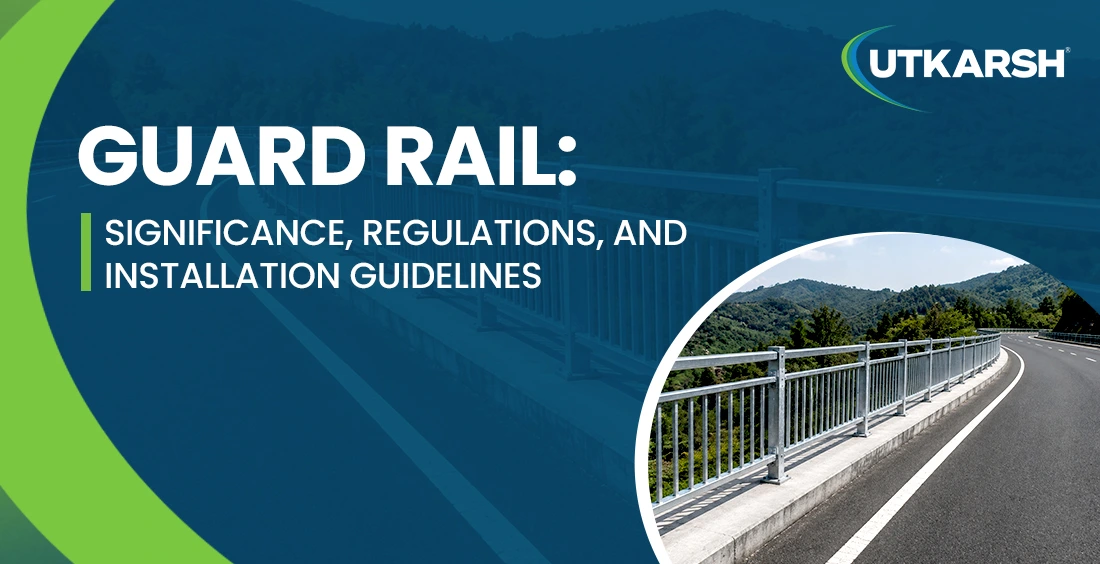
Every day, roads across cities, highways, industrial zones, and public spaces witness heavy movement of vehicles and pedestrians. Without proper separation and guidance systems, the risk of accidents, jaywalking incidents, and vehicle encroachments increases significantly. According to road safety authorities, pedestrian-related accidents continue to be a major concern in developing urban environments.
Poorly managed pedestrian movement, unauthorised road crossings, and inadequate roadside protection can lead to severe injuries, traffic disruptions, and even fatalities. In high-traffic areas, the absence of robust highway guard rail and pedestrian barrier systems often creates confusion for both motorists and pedestrians.
Well-designed guard rail systems act as a physical and visual safety barrier that directs pedestrian movement, prevents accidental roadway access, and enhances overall traffic discipline. These systems contribute significantly to safer roads, organised pedestrian flow, and improved infrastructure resilience.
What is a Guard Rail?
A guard rail is a protective barrier installed alongside roads, highways, bridges, medians, walkways, and public areas to prevent unauthorised access, guide pedestrian movement, and minimise accident risks.
Modern guard rail systems are typically manufactured using galvanised steel and engineered to withstand environmental exposure while delivering long-term structural performance.
Significance of Guard Rail Systems
Guard rails are passive safety systems engineered to protect human life and structural assets. Their implementation spans across diverse landscapes, from high-speed highways to busy urban pathways, delivering layered security benefits.
- Mitigating Pedestrian and Vehicular Risks: In crowded metros, pedestrian guardrails systematically eliminate jaywalking by organising foot traffic into designated crossing zones. On open roadways, a highway guard rail absorbs the kinetic energy of errant vehicles, preventing them from colliding with solid roadside hazards or rolling down sharp embankments.
- Aesthetic Integration into Urban Contexts: Modern barriers are no longer mere steel obstructions. They act as design components that blend smoothly into city streets, public plazas, and corporate commercial spaces while providing maximum security.
-
Versatile Spatial Applications: Advanced safety perimeters are critical across various high-value spaces:
- Urban Streets & Walkways: Directing continuous foot traffic away from active vehicular lanes.
- Public Parks & Plazas: Providing demarcation boundaries around recreational areas.
- Construction Sites: Securing restricted spaces from unauthorised entry and protecting the public from structural debris.
- Educational Institutions: Generating highly secure drop-off zones and pathways for students.
- Event Venues: Controlling dense crowd movements during heavy public gatherings.
Types of Guard Rail Systems
Depending on the project requirements and the specific demands of road safety infrastructure, different types of guard rail systems are used to enhance pedestrian protection, traffic management, and roadside safety:
Pedestrian Guard Rails
Designed specifically to separate pedestrians from vehicular traffic and guide foot movement safely.
Highway Guard Rails
Installed along highways, expressways, bridges, and elevated corridors to improve roadside safety.
Median Barriers
Used to separate opposing traffic flows and prevent dangerous crossovers.
Crowd Management Barriers
Commonly deployed during public events, transportation hubs, and commercial gatherings.
Construction Safety Barriers
Temporary or permanent barriers used to protect workers and pedestrians near active construction zones.
Regulatory Standards and Guidelines for Guard Rail Installation
The effectiveness of a guard rail depends heavily on adherence to recognised standards and engineering guidelines.
Material Standards
Quality guard rail systems are generally manufactured using high-grade steel with corrosion-resistant coatings.
Key requirements often include:
- Hot-dip galvanisation
- High zinc purity coatings
- Structural durability
- Weather resistance
- Corrosion protection
Utkarsh India's pedestrian barriers are galvanised using high-grade zinc and manufactured under stringent quality control measures to ensure durability and long-term performance.
Structural Requirements
A compliant guard rail system should provide:
- Adequate mechanical strength
- Impact resistance
- Stable foundation support
- Long service life
- Consistent dimensional accuracy
Visibility Standards
Road safety barriers should remain clearly visible under various environmental conditions.
Recommended features include:
- Reflective elements
- High-visibility designs
- Uniform alignment
- Proper spacing
High-visibility designs significantly improve road user awareness, particularly during low-light conditions and adverse weather.
Quality Testing Requirements
Before deployment, guard rail systems typically undergo:
- Thickness verification
- Yield strength testing
- Ultimate tensile strength testing
- Elongation testing
- Dimensional inspections
These tests help ensure that barriers can withstand operational demands while maintaining safety performance.
Why Galvanised Guard Rail Systems are Preferred
Galvanised steel remains one of the most widely used materials for guard rails due to its exceptional performance characteristics.
Key advantages include:
- High corrosion resistance
- Extended service life
- Lower maintenance requirements
- Superior structural strength
- Cost-effective lifecycle performance
Modern pedestrian barriers manufactured using galvanised steel provide excellent durability even in demanding urban and industrial environments.
Also Read: The Role of Pedestrian Guardrails in Safe Highway and Flyover Construction
Conclusion
Guard rail systems are an essential component of modern transportation infrastructure. From enhancing pedestrian safety and managing traffic flow to protecting valuable infrastructure assets, these barriers play a crucial role in creating safer and more organised road environments. By following established regulations, selecting quality materials, and adhering to proper installation practices, authorities and project developers can significantly improve road safety outcomes and support long-term infrastructure sustainability.
For infrastructure projects seeking reliable and durable guard rail solutions, choosing high-quality systems designed to meet stringent engineering standards is key to achieving lasting performance and safety.
As the best infrastructure company in India, Utkarsh India offers a comprehensive range of pedestrian barriers and guard rail solutions engineered for durability, safety, and long-term performance. Manufactured using premium-grade galvanised steel and tested to stringent quality standards, Utkarsh India's barrier systems are trusted by municipal bodies, EPC contractors, and infrastructure developers across the country. With robust construction, high visibility, and reliable corrosion resistance, the company continues to contribute to safer roads, smarter cities, and stronger infrastructure networks.
FAQs
What is the purpose of a guard rail?
A guard rail is designed to improve road safety by separating pedestrians from vehicular traffic, guiding movement, and reducing the risk of accidents.
Where are guard rail systems commonly installed?
Guard rail systems are commonly installed on highways, urban roads, bridges, medians, schools, commercial areas, public parks, and construction sites.
What materials are used in guard rail manufacturing?
Most modern guard rails are manufactured using high-quality galvanised steel for superior strength, durability, and corrosion resistance.
How do road safety barriers improve pedestrian protection?
Road safety barriers create controlled pedestrian pathways, discourage jaywalking, and prevent accidental entry into traffic lanes.
What is the difference between pedestrian barriers and highway guard rails?
Pedestrian barriers primarily manage foot traffic and protect pedestrians, while highway guard rails are designed to improve vehicle and roadside safety.
Why is galvanisation important in guard rail systems?
Galvanisation provides a protective zinc coating that prevents corrosion, increases service life, and reduces maintenance requirements.
How often should guard rails be inspected?
Routine inspections should be conducted periodically to identify damage, corrosion, loose fittings, or structural issues that may affect performance.
What factors should be considered before guard rail installation?
Key considerations include traffic volume, pedestrian density, road geometry, visibility conditions, environmental exposure, and applicable safety standards.