

A Technical Guide to Pedestrian Safety Barrier Height and Load Resistance
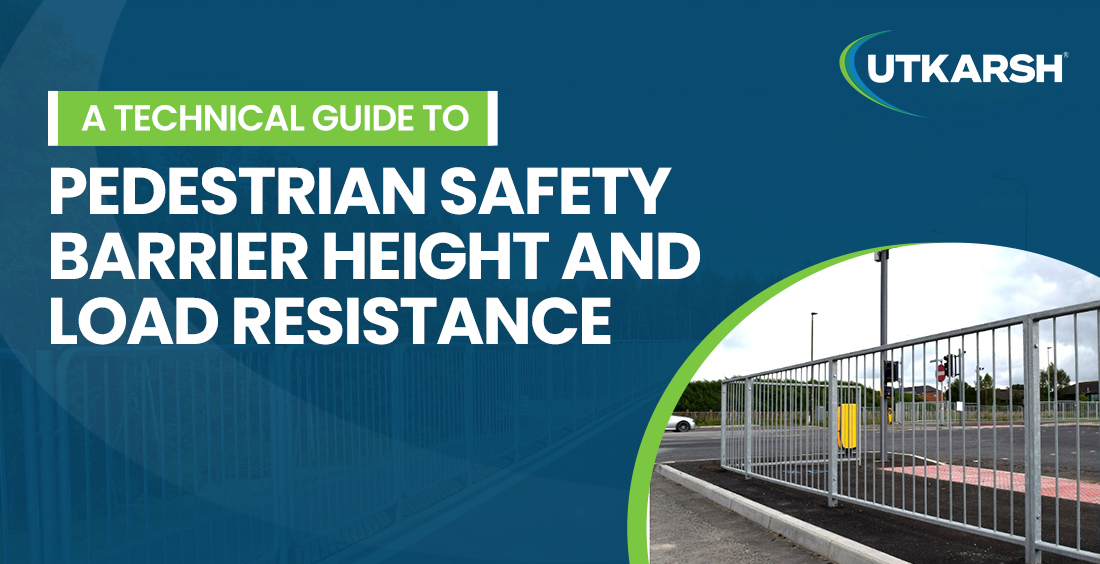
Pedestrian safety is a critical component of modern infrastructure planning, especially in urban roads, highways, construction zones, public spaces, and industrial areas. One of the most effective solutions for reducing pedestrian risk is the use of pedestrian safety barriers. These systems help separate pedestrians from vehicular traffic, guide safe movement, and prevent accidental entry into hazardous zones.
This technical guide explains the importance of pedestrian barrier height, pedestrian barrier load resistance, and the role of pedestrian guardrails in creating safer environments, while highlighting best practices followed by leading manufacturers Utkarsh India.
What is a Pedestrian Safety Barrier?
A pedestrian safety barrier is a physical protective system designed to regulate pedestrian movement and provide a safety buffer between people and potential hazards such as moving vehicles, construction activity, or restricted areas. These barriers are widely used along roadsides, footpaths, medians, flyovers, intersections, and public gathering zones.
High-quality pedestrian safety barriers are engineered for durability, structural strength, and long-term outdoor performance. Utkarsh India offers robust pedestrian barrier solutions manufactured with precision-engineered steel and corrosion-resistant finishes to meet infrastructure safety requirements.
Importance of Pedestrian Barrier Height
Pedestrian barrier height plays a crucial role in determining how effective a barrier is in preventing unsafe pedestrian behavior.
Why Pedestrian Barrier Height Matters
- Prevents pedestrians from crossing at unsafe or unauthorized locations
- Discourages climbing, leaning, or accidental falls into traffic zones
- Improves visual guidance and movement control
- Enhances compliance with road safety and urban design standards
The appropriate pedestrian barrier height depends on the application area, pedestrian density, and surrounding traffic conditions. In most urban and highway applications, pedestrian barriers are designed to be tall enough to restrict unsafe access while maintaining visibility and aesthetic balance.
Utkarsh India’s pedestrian guardrails are manufactured with optimized barrier heights that support both safety and functional design across diverse infrastructure projects.
Understanding Pedestrian Barrier Load Resistance
Another critical performance parameter is pedestrian barrier load resistance, which defines the ability of a barrier to withstand applied forces without failure.
Key Load Resistance Considerations
- Resistance to lateral loads caused by pedestrian pressure
- Ability to withstand accidental vehicle contact
- Stability under crowd movement and impact forces
- Long-term performance under environmental stress
High pedestrian barrier load resistance ensures that barriers remain structurally stable during real-world conditions such as crowd surges, accidental impacts, or repeated use. Utkarsh India design pedestrian safety barrier using strong steel sections that deliver consistent load resistance while maintaining structural integrity over time.
Role of Pedestrian Guards in Public Safety
Pedestrian guardrails are a specialized form of pedestrian safety barriers, commonly installed along roads, highways, flyovers, and intersections. Their primary purpose is to guide pedestrians toward designated crossing points and prevent sudden or unsafe road entry.
Key benefits of pedestrian guardrails include:
- Controlled pedestrian flow
- Reduced jaywalking and accident risk
- Improved road discipline
- Enhanced visual separation between traffic and walkways
Utkarsh India’s pedestrian guardrails are designed with modular construction and uniform spacing, making them suitable for large-scale infrastructure deployments while ensuring ease of installation and maintenance.
Also Read: The Role of Pedestrian Guardrails in Safe Highway and Flyover Construction
Material Selection and Structural Design
The performance of pedestrian safety barriers heavily depends on material quality and manufacturing processes.
Key Materials and Design Features
- High-strength steel construction for enhanced load resistance
- Hot-dip galvanization for corrosion protection and long service life
- Smooth edges and uniform finishes for pedestrian safety
- Modular designs for easy handling and replacement
Utkarsh India follows strict quality standards in manufacturing pedestrian safety barriers to ensure durability, safety compliance, and long-term cost efficiency for infrastructure authorities.
Applications of Pedestrian Safety Barriers
Pedestrian safety barriers are widely used in:
- Urban roads and sidewalks
- Highway medians and flyovers
- Construction and work zones
- Public parks and commercial spaces
- Educational institutions, hospitals, and industrial premises
In all these environments, the correct pedestrian barrier height and pedestrian barrier load resistance play a vital role in ensuring safety and functionality.
Conclusion
A well-designed pedestrian safety barrier system is essential for protecting lives and improving pedestrian movement in high-risk areas. By focusing on correct pedestrian barrier height, robust pedestrian barrier load resistance, and effective use of pedestrian guardrails, infrastructure planners can significantly reduce accidents and improve public safety outcomes.
Utkarsh India stands out as a trusted manufacturer of pedestrian safety barriers, offering engineered solutions that combine strength, durability, and compliance with modern infrastructure standards. Their commitment to quality manufacturing and safety-driven design makes them a reliable partner for pedestrian protection across urban and highway projects.
Frequently Asked Questions (FAQs)
1. What are pedestrian safety barriers used for?
Pedestrian safety barriers are used to separate pedestrians from traffic, control movement, and prevent access to hazardous areas.
2. What is the ideal pedestrian barrier height?
Pedestrian barrier height varies by application, but it is designed to prevent unsafe crossing while maintaining visibility and compliance with safety norms.
3. Why is pedestrian barrier load resistance important?
Pedestrian barrier load resistance ensures the barrier can withstand crowd pressure, impacts, and environmental forces without structural failure.
4. Are pedestrian guardrails different from pedestrian safety barriers?
Pedestrian guardrails are a type of pedestrian safety barrier specifically designed to guide pedestrians along roads and highways.
5. What materials are best for pedestrian safety barriers?
Steel barriers with hot-dip galvanization are preferred for their strength, corrosion resistance, and long service life.
6. Why choose Utkarsh India for pedestrian safety barriers?
Utkarsh India offers high-quality pedestrian safety barriers engineered for durability, safety compliance, and reliable performance in diverse infrastructure environments.