

Why Prefabricated Steel Structures are Changing Industrial Construction
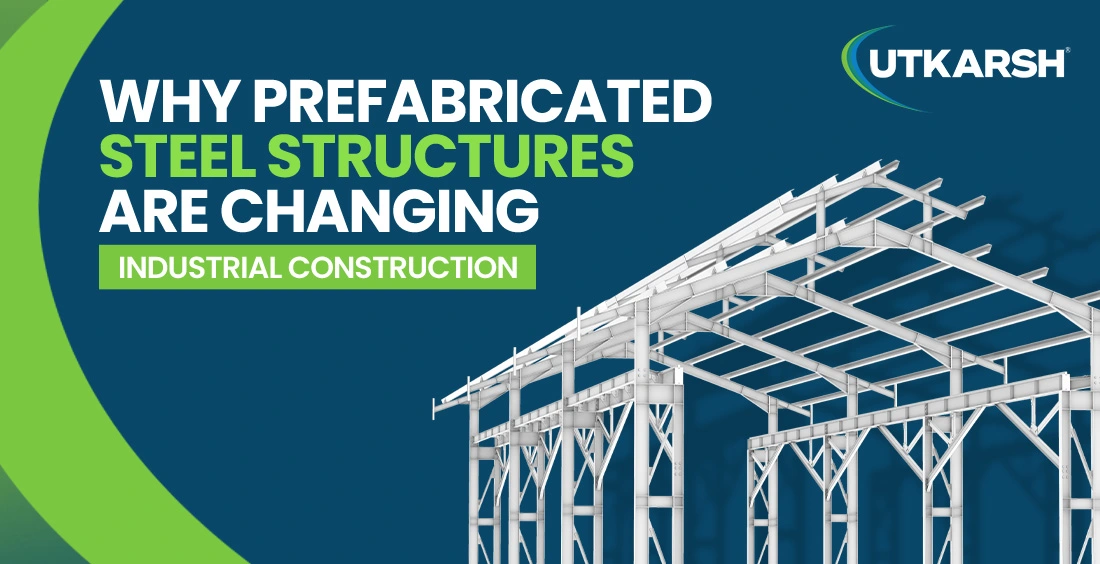
India is steadily moving toward the vision of a developed and self-reliant economy where infrastructure growth is driven by speed, innovation, and efficiency. Across sectors, industries are embracing advanced manufacturing technologies, automation, smart logistics, and data-driven operations. As industrial expansion accelerates, businesses are increasingly looking for construction solutions that can keep pace with changing operational demands.
Traditional construction methods often struggle to match the speed and flexibility required in today’s industrial environment. Long construction timelines, rising material costs, and operational delays can slow down expansion plans and impact productivity.
This is where prefabricated steel structures are redefining industrial construction.
Modern businesses now prefer faster, scalable, and more efficient infrastructure solutions that allow them to establish manufacturing units, warehouses, logistics hubs, and commercial facilities with minimal delays. With their ability to reduce construction timelines and improve operational efficiency, pre engineered metal buildings have become the preferred choice for industries across India.
As one of the fastest-growing sectors in modern infrastructure development, pre engineered steel buildings are helping industries build smarter while supporting the country’s larger industrial growth ambitions.
Why Prefabricated Steel Structures are Leading the Shift
1. Faster Project Execution
In today’s competitive industrial landscape, time directly impacts profitability. Prefabricated steel structures are manufactured off-site while groundwork preparation continues simultaneously. This parallel construction approach significantly reduces project completion time compared to traditional construction methods.
For industries planning expansion or setting up pilot projects, this speed offers a major competitive advantage.
2. Better Cost Efficiency
One of the biggest advantages of pre engineered metal buildings is optimized cost management. Since components are precision-engineered in controlled factory environments, material wastage is minimized, and project execution becomes more predictable.
Businesses benefit from:
- Reduced labor dependency
- Lower material wastage
- Faster return on investment
- Better budget planning
This makes steel-based industrial construction a practical and cost-effective long-term solution.
3. High Strength and Durability
Modern industrial steel structures are engineered to withstand heavy operational loads, challenging weather conditions, and demanding industrial environments. These structures offer excellent structural integrity and require comparatively lower maintenance over time.
Their durability makes them ideal for:
- Manufacturing plants
- Warehouses
- Industrial sheds
- Logistics parks
- Infrastructure projects
4. Flexibility and Scalability
Industrial requirements constantly evolve. Businesses may need to expand warehouse space, modify production layouts, or add new operational units over time.
Pre engineered steel buildings offer the flexibility to:
- Expand facilities easily
- Modify layouts with minimal disruption
- Relocate or redesign structures when needed
This adaptability makes them highly suitable for rapidly growing industries.
5. Sustainable and Eco-Friendly Construction
Sustainability is becoming a key focus area for modern industries. Prefabricated steel structures support greener construction practices by reducing material waste and improving resource efficiency.
Steel is one of the most recyclable construction materials available today. Most industrial steel structures can be reused or recycled without compromising strength or quality.
Additional environmental benefits include:
- Reduced construction waste
- Lower on-site pollution
- Efficient use of raw materials
- Reduced energy consumption during construction
This makes pre engineered metal buildings an environmentally responsible choice for future-ready industrial development.
6. Precision Manufacturing and Quality Control
Unlike conventional construction, where quality can vary on-site, prefabricated steel structures are manufactured in controlled production facilities using advanced engineering technologies.
This ensures:
- Better dimensional accuracy
- Consistent quality standards
- Improved structural reliability
- Faster installation with minimal errors
The use of precision engineering helps industries achieve safer and more efficient infrastructure development.
Also Read: A Cost-Benefit Analysis: Pre-Engineered Steel Buildings vs. Traditional
Why Businesses Prefer Pre Engineered Building Manufacturers
As industrial projects become larger and more complex, businesses are increasingly partnering with experienced pre engineered building manufacturers that can provide complete end-to-end solutions.
From design and engineering to fabrication and installation, professional manufacturers help streamline project execution while ensuring compliance, quality, and operational efficiency.
The growing demand for integrated industrial infrastructure solutions has also increased the importance of choosing the best infrastructure company in India that can deliver scalable and future-ready projects.
Also Read: 5 Reasons Why Pre Engineered Steel Buildings are a Builder’s First Choice
Utkarsh India: Delivering Modern Industrial Infrastructure Solutions
Among leading pre engineered building manufacturers, Utkarsh India has established a strong reputation through its engineering expertise, advanced manufacturing capabilities, and integrated project execution approach.
With decades of experience in steel and infrastructure solutions, the company delivers high-performance pre engineered steel buildings designed for modern industrial applications.
What Makes Utkarsh India a Preferred Choice
End-to-End Project Expertise
From planning and engineering to fabrication and installation, the company offers complete industrial building solutions under one roof.
Advanced Manufacturing Infrastructure
Its modern production facilities support the execution of large-scale industrial and infrastructure projects with precision and efficiency.
Strong Focus on Quality and Safety
The company follows stringent quality standards and engineering practices to ensure durability, compliance, and structural reliability.
Versatile Industrial Applications
Their pre engineered metal buildings are widely used for:
- Warehouses
- Manufacturing units
- Logistics hubs
- Industrial sheds
- Commercial infrastructure
With a strong focus on innovation and operational excellence, Utkarsh India continues to strengthen its position among the best infrastructure company in India for industrial steel solutions.
The Future of Industrial Construction
The future of industrial infrastructure is no longer just about constructing physical spaces. It is about building intelligent, scalable, and adaptable environments that support operational efficiency and long-term growth.
Prefabricated steel structures are playing a major role in this transformation by helping industries:
- Build faster
- Optimize costs
- Improve sustainability
- Scale operations efficiently
- Adopt modern engineering practices
As India continues to modernize its industrial ecosystem, the demand for pre engineered steel buildings and advanced industrial steel structures is expected to grow rapidly.
Forward-looking pre engineered building manufacturers like Utkarsh India are helping industries transition toward smarter infrastructure solutions through innovation, precision engineering, and technology-driven execution.
For businesses looking to stay competitive in a rapidly evolving industrial landscape, investing in pre engineered metal buildings is becoming a strategic advantage for long-term growth and operational efficiency.
FAQs
1. What are prefabricated steel structures?
Prefabricated steel structures are buildings whose components are manufactured in factories and assembled on-site. They offer faster construction, better quality control, and improved cost efficiency compared to traditional construction methods.
2. Why are pre engineered metal buildings becoming popular in India?
Pre engineered metal buildings are gaining popularity because they reduce construction time, optimize costs, offer design flexibility, and support sustainable industrial development.
3. Which industries commonly use pre engineered steel buildings?
Industries such as manufacturing, warehousing, logistics, infrastructure, power, commercial construction, and retail commonly use pre engineered steel buildings.
4. How do pre engineered building manufacturers improve project efficiency?
Experienced pre engineered building manufacturers provide integrated services including design, fabrication, and installation, helping businesses reduce delays and improve project execution.
5. Are prefabricated steel structures environmentally friendly?
Yes. Steel is highly recyclable, and factory-based production significantly reduces material wastage, making prefabricated steel structures a sustainable construction solution.
6. Why is Utkarsh India considered among the best infrastructure company in India?
Utkarsh India is recognized for its engineering expertise, advanced manufacturing capabilities, quality-focused approach, and ability to deliver scalable industrial infrastructure solutions across sectors.