

Octagonal Pole Price in India: 10 Factors That Decide the Cost
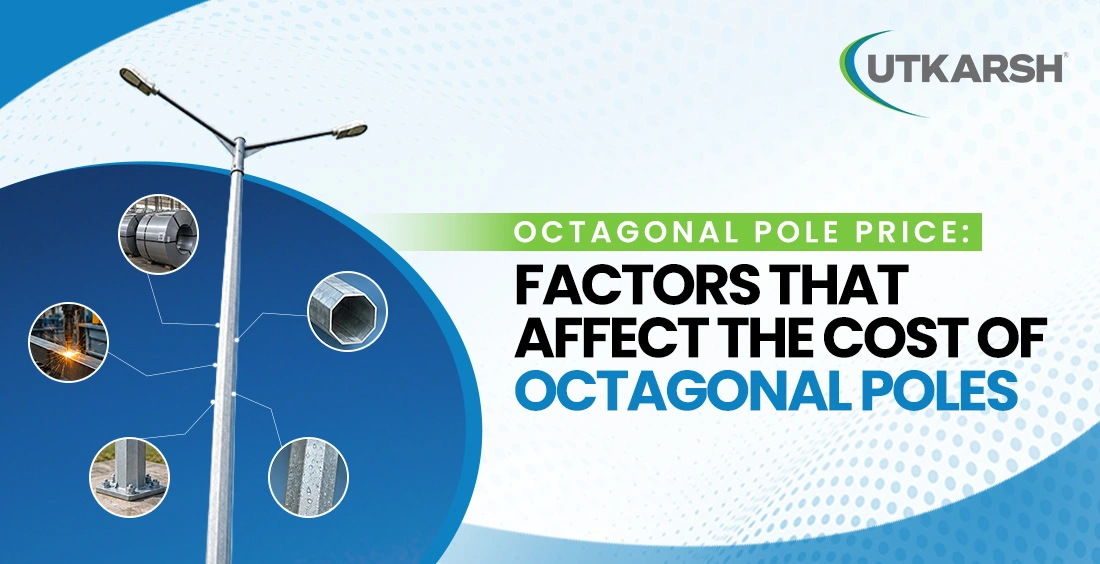
Octagonal poles are tapered, eight-sided steel poles used for street lighting, highway lighting, power distribution, CCTV surveillance, solar lighting and outdoor area illumination. They are made by cutting and press-bending steel plates into an octagonal section, then seam welding, fitting a base plate, and hot-dip galvanising the pole for corrosion protection. Because each pole is engineered for a specific height, wind zone and fixture load, there is no single octagonal pole price in the market.
The final octagonal pole rate depends on height, plate thickness, steel grade, top and bottom diameter, galvanising, bracket design, accessories, order quantity and delivery location. Knowing how each of these factors shapes the price helps you compare quotations accurately and pick a pole that gives you the best value over its service life.
Comparing octagonal pole quotes? Get an itemised quotation built around your pole height, wind zone and bracket load. Request a quotation →
Comparing Octagonal Pole Prices
Ask five suppliers for a quote on a 9 metre octagonal pole, and you may get five very different numbers. The gap is rarely the profit margin alone. Most of the time, each supplier is quoting a different pole.
One may use a 3 mm plate, another 4 mm. One may hot-dip galvanise to the required coating thickness; another may offer a thinner coat. One quote may include the base plate, foundation bolts and bracket, while another leaves them out. On paper, all five are “9 metre octagonal poles.”
The trouble shows up after installation. A pole bought only on the lowest price can:
- Rust within a few monsoons because the zinc coating was too thin or uneven.
- Bend or fail in high winds because the plate thickness or section did not match the site’s wind zone.
- Fail tender inspection because it does not match the specified drawings and standards.
- Cost more later through replacements, reinstallation, road closures and project delays.
So compare specifications first, then price. The sections below explain what drives the cost of a galvanised octagonal pole and what to look for in each line of a quotation. For a detailed spec checklist, see our guide on GI octagonal pole technical specifications to check before procurement.
10 Factors That Affect Octagonal Pole Price
1. Pole Height
Height is the biggest single cost driver. A taller pole uses more steel, needs a larger bottom diameter and thicker plate to carry wind loads, and takes more time to fabricate and galvanise. A 10 or 11 metre highway pole will cost noticeably more than a 6 or 7 metre pole used on internal roads or campuses. Utkarsh India manufactures octagonal poles from 3 metres upward, with custom sizes based on project needs.
2. Plate Thickness
Octagonal poles are made from steel plates, and thickness has a direct effect on weight and price. A thicker plate means more steel per pole, but it also means more strength and stiffness. The right thickness depends on height, wind zone and fixture load, so going thinner to save money can be risky.
3. Steel Grade and Raw Material Source
The grade of steel and where it comes from also affect price. Poles made from high-tensile steel sourced from established mills such as SAIL and TATA Steel cost more than poles made from unverified material, but they deliver consistent strength and traceable quality. Since steel is a commodity, changes in HR coil prices also move octagonal pole prices from month to month.
4. Top and Bottom Diameter (Taper)
Octagonal poles taper from a wider base to a narrower top. The top diameter is set by the bracket or luminaire it must hold, while the bottom diameter and the rate of taper decide how much steel goes into the shaft. Two poles of the same height can differ in weight, and price, simply because one has a wider base or a gentler taper. Check both diameters on every quotation, not just the height.
5. Galvanisation
Hot-dip galvanising protects the pole from rust and is essential for outdoor use. The cost depends on the pole’s surface area and the zinc coating thickness specified. Zinc prices also fluctuate, which affects the final rate. A properly galvanised octagonal pole costs more upfront but avoids early corrosion and repainting. Some projects add powder coating over galvanising for colour and aesthetics, which adds further cost.
6. Wind Zone and Design Load
Wind is what the pole is really designed against. A pole for a coastal highway must handle far higher wind forces than one inside a residential township, so it needs a thicker plate, a wider base, a larger section and a stronger base plate. All of these add steel and cost. Utkarsh India’s octagonal poles are engineered to withstand wind speeds of up to 300 km/h and are validated through wind tunnel testing by IIT Kanpur and structural stability testing by CSIR, Chennai.
7. Bracket and Arm Configuration
Single-arm, double-arm and decorative 3 or 4-arm brackets all differ in material and fabrication effort. Decorative brackets for city beautification or premium campuses cost more than standard single arms.
8. Base Plate, Foundation Bolts and Accessories
Base plates, anchor bolts, door openings, junction boxes, earthing provisions and cable entry points all add to the price. Always check whether a quotation includes these items or lists them separately.
9. Order Quantity
Bulk orders lower the cost per pole. Larger quantities allow better material planning, efficient production runs and economical transport. A manufacturer with high production capacity can offer stronger pricing on volume orders.
10. Freight, Location and Installation
Octagonal poles are long and heavy, so transport costs depend on distance, route and the number of trucks needed. Installation, foundation work and erection are usually quoted separately from supply. Make sure you know which of these are included before comparing octagonal pole rates.
Ways to Save on Octagonal Poles Without Cutting Quality
You can reduce your total spend without risking safety:
- Buy directly from an octagonal pole manufacturer. Sourcing from the manufacturer removes trader margins and gives you direct access to engineering support and test reports.
- Standardise heights where possible. Using fewer height variations across a project simplifies production and can lower the per-pole rate.
- Design for your actual wind zone. Over-designing for a much higher wind speed than your site needs adds steel and cost. Share site details so the pole is engineered correctly.
- Order in planned batches. Consolidated orders reduce production setup and freight costs per pole.
- Choose brackets based on purpose. Use decorative multi-arm brackets where aesthetics matter, and standard brackets for functional roads.
- Ask for an itemised quotation. Separate prices for pole, bracket, base plate, bolts, galvanising, freight and installation make it easier to spot gaps and compare suppliers fairly.
- Plan lead times early. Rush orders can raise costs. Early planning lets the manufacturer schedule production and transport more economically.
ALSO READ: How to Avoid Common Pricing Mistakes When Buying Light Poles
Checklist: What to Ask Before You Accept an Octagonal Pole Quotation
- Pole height, top and bottom diameter, and plate thickness
- Steel grade and mill test certificates
- Galvanising standard and zinc coating thickness
- Design wind speed and structural calculations
- Bracket type and number of arms
- Base plate size, foundation bolts and accessories included
- Testing and inspection reports
- Freight, delivery schedule and installation scope
- Warranty terms
Why Choose Utkarsh India as Your Octagonal Pole Manufacturer
Utkarsh India brings more than four decades of experience in steel fabrication and galvanisation to every pole it makes. Its manufacturing setup has a yearly production capacity of 400,000 poles, which helps it deliver large orders on time.
Its octagonal poles are made from high-tensile steel sourced from SAIL and TATA Steel and are produced under an ISO 9001:2015 certified process. Galvanising is done in-house across four 12.5 metre hot-dip galvanising facilities, using Special High Grade zinc (99.995% purity) from Hindustan Zinc Limited. The poles are wind tunnel tested by IIT Kanpur and checked for structural stability by CSIR, Chennai. Utkarsh India has supplied octagonal and polygonal street lighting poles for NHAI projects in Kanpur, Chennai and Sambalpur, as well as for the Bengaluru Development Authority and Damodar Valley Corporation.
Whether you need standard street light poles or customised designs with decorative brackets, explore the full range of polygonal and octagonal poles and share your project details to get a customised quotation.
Frequently Asked Questions
What is the price of an octagonal pole in India?
There is no fixed price, because each octagonal pole is built to a specific height, plate thickness, wind zone and bracket load. As a rule, a 6 to 7 metre pole for internal roads costs much less than a 10 to 11 metre highway pole, and galvanising, accessories, quantity and freight change the final figure further. To get an accurate octagonal pole rate, share your height, wind zone, bracket type and quantity with the manufacturer and ask for an itemised quotation.
Why do octagonal pole rates vary so much between suppliers?
Rates vary because suppliers often quote different specifications under the same pole height. Differences in plate thickness, steel source, zinc coating thickness, design wind speed and included accessories can change the price significantly. Always compare quotations on specifications, not just the final figure.
What is the weight of a 9 m octagonal pole?
The weight of a 9 m octagonal pole depends on its plate thickness, top and bottom diameter, steel grade, base plate size and accessories, so it varies from one design to another. A 9 m pole designed for a high wind zone will weigh more than one built for a sheltered site. Since steel weight drives most of the cost, ask the manufacturer for the design weight in every quotation so you can compare like for like.
Octagonal vs conical pole: which costs more?
Neither is always cheaper. For the same height and load, the price difference mostly comes from how much steel each design needs and how it is fabricated. Octagonal poles are widely used for street and highway lighting, while conical poles are often chosen for a smoother look in urban and landscaped areas. Ask for both options at the same height, wind speed and bracket load to see which works out better for your project.
Is a galvanised octagonal pole worth the extra cost?
Yes. Hot-dip galvanising protects the steel from rust and greatly extends the pole’s service life, especially in humid, coastal and industrial areas. It reduces maintenance and replacement costs, which makes a galvanised octagonal pole more economical over its lifetime than an ungalvanised or poorly coated pole.
How can I reduce the cost of octagonal poles for my project?
You can reduce cost by buying directly from an octagonal pole manufacturer, standardising pole heights, designing for your actual wind zone, ordering in bulk, choosing brackets based on need and planning delivery schedules early. These steps lower the total cost without compromising strength or safety.