

Fire Sprinkler System Components: A Complete Guide for Building Projects
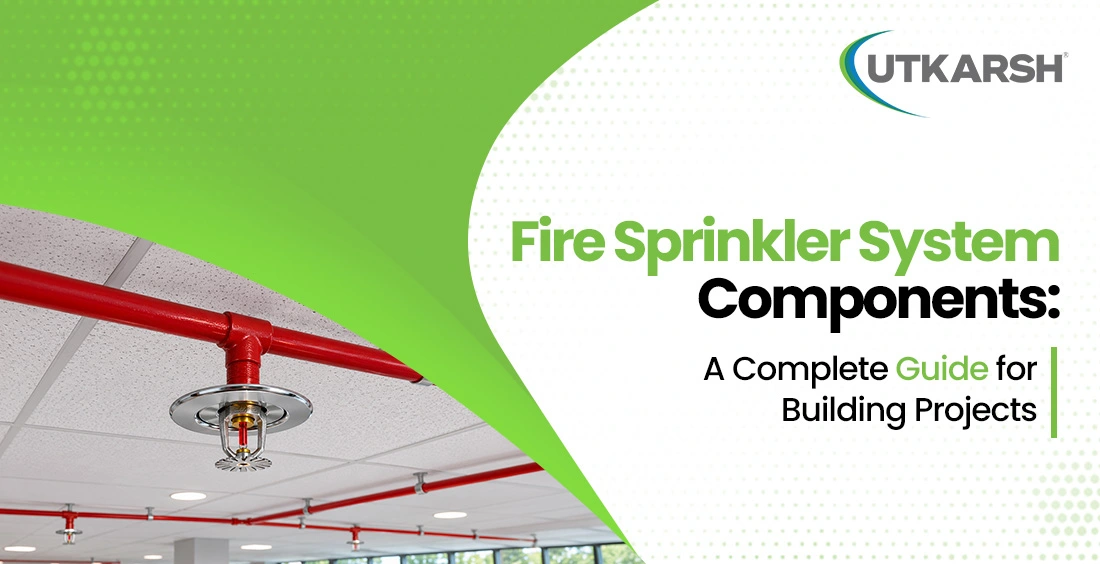
A fire sprinkler system is one of the most critical parts of modern fire protection infrastructure. It detects heat and automatically controls or suppresses a fire before it spreads, protecting lives, assets and business continuity.
These systems are used across commercial buildings, industrial facilities, warehouses, manufacturing units, residential complexes, hospitals, airports, data centres and educational institutions. But how well a system performs depends on every component inside it. Here is a quick guide to the key fire sprinkler components and what each one does.
Planning a fire sprinkler system for your project? Explore our certified GI sprinkler pipes and get a quote →
Key Fire Sprinkler Components
1. Water Supply
Every fire protection system starts with a dependable water source, usually a dedicated fire water tank, an overhead tank or a municipal supply. It must provide enough water at the required pressure for the full duration of a fire.
2. Fire Pumps
Fire pumps keep the network pressurised and deliver water at the required flow when sprinklers activate. Most buildings use a main pump, a standby pump and a small jockey pump that maintains constant pressure in the system.
3. Fire Sprinkler Pipe Network
The piping network is the backbone of the system. It carries water from the pumps to every sprinkler head through:
- Vertical risers that carry water to each floor
- Overhead distribution lines that run across each floor
- Branch lines that connect directly to the sprinkler heads
Every fire sprinkler pipe must perform under high pressure, changing environmental conditions and continuous service, often for decades without being used. This is why GI pipes are widely preferred. Their zinc coating protects against rust and environmental damage, and they are strong enough to handle the high pressure needed for rapid water discharge.
Also Read: Fire Sprinkler Pipe: Types, Materials, and Selection Guide
4. Control Valves
Control valves regulate water flow and allow sections of the system to be isolated for maintenance or repair. They must remain accessible and operational at all times.
5. Alarm Valve
The alarm valve detects water movement in the pipes when a sprinkler opens. It triggers the fire alarm so occupants can evacuate and emergency teams can respond quickly.
6. Pressure Gauges
Pressure gauges show whether the system is charged and ready. Any drop from normal levels is an early warning of a leak or valve issue.
7. Sprinkler Heads
Sprinkler heads are placed across the premises for maximum coverage. Each one has a heat-sensitive glass bulb or fusible link that breaks at a set temperature, releasing water directly over the fire. Only the heads exposed to enough heat open, which keeps water damage to a minimum.
Types of Fire Sprinkler Systems
The components used in a project depend on the type of fire sprinkler system:
- Wet pipe systems: Pipes stay filled with water and discharge immediately when a head activates. They offer quick response, a simple design and cost-effective installation and maintenance.
- Dry pipe systems: Pipes hold pressurised air or nitrogen, and water flows only after a head is triggered. They suit unheated or freezing areas and reduce water damage from accidental activation.
- Deluge systems: Open heads release a large volume of water once a deluge valve is activated by a fire detection system. They are used in high-hazard areas with flammable liquids.
- Pre-action systems: A hybrid of wet and dry systems that needs two triggers before water enters the pipes. Ideal for data centres and museums where accidental discharge must be avoided.
- Foam water systems: Combine foam concentrate with water to tackle liquid and chemical fires, providing a cooling effect and preventing re-ignition. Common in industrial and hazardous material facilities.
What a Reliable Fire Sprinkler Pipe Should Offer
Since the pipe network carries the entire system, its quality decides how dependable the fire suppression system will be. A good fire sprinkler pipe should offer:
- Consistent high-pressure water distribution
- Superior corrosion and environmental resistance
- Dimensional precision for seamless installation
- Structural integrity under continuous service conditions
- Low maintenance and a long operational lifespan
GI pipes can also be customised in diameter, length and threading, and manufactured to specific pressure ratings and environmental conditions to match each system's design and flow requirements.
Also Read: How to Choose the Right Sprinkler Pipe for Industrial Buildings
Installation and Maintenance at a Glance
Installation: The process begins with a building assessment, followed by detailed blueprints submitted to local fire authorities for approval. Quality components such as GI sprinkler pipes are then selected, cut, threaded and installed as per the approved design, and sprinkler heads are placed for full coverage. Finally, the system undergoes a hydrostatic pressure test to confirm it is leak-free and ready.
Maintenance: Routine inspections check the pipes for leaks, corrosion and damage. Sprinkler heads are tested and kept free of obstructions, control valves are kept accessible and pressure gauges are monitored. An annual inspection by a certified professional confirms the system complies with safety codes.
Fire Sprinkler Pipes by Utkarsh India
Utkarsh India manufactures certified GI sprinkler pipes engineered for durability, corrosion resistance, dimensional accuracy and dependable performance under critical conditions. Our pipes support distribution lines, risers and branch connections across industrial, commercial, residential and institutional fire sprinkler systems.
With 40 years of manufacturing excellence and a team of over 100 engineers across the country, Utkarsh India is a trusted partner for fire protection and infrastructure projects.
FAQs
1. What are the main components of a fire sprinkler system?
The main fire sprinkler components are the water supply, fire pumps, the fire sprinkler pipe network, control valves, the alarm valve, pressure gauges and sprinkler heads.
2. Why are GI pipes preferred for fire sprinkler systems?
GI pipes have a zinc coating that protects them from rust and environmental damage. They are structurally strong, handle high pressure, are easy to install and work well with other system components.
3. Which fire sprinkler system is best for cold areas?
Dry pipe systems are best for unheated buildings or areas prone to freezing, since the pipes hold pressurised air or nitrogen instead of water until the system activates.
4. Can GI pipes be customised for a sprinkler project?
Yes. GI pipes can be customised in diameter, length and threading, and manufactured to suit specific pressure ratings and environmental conditions.
5. How often should a fire sprinkler system be inspected?
Routine checks should be carried out regularly, along with an annual inspection by a certified professional to confirm the system meets safety codes and is ready for emergencies.