

How Material, Coating, and Design Impact Crash Barrier Price
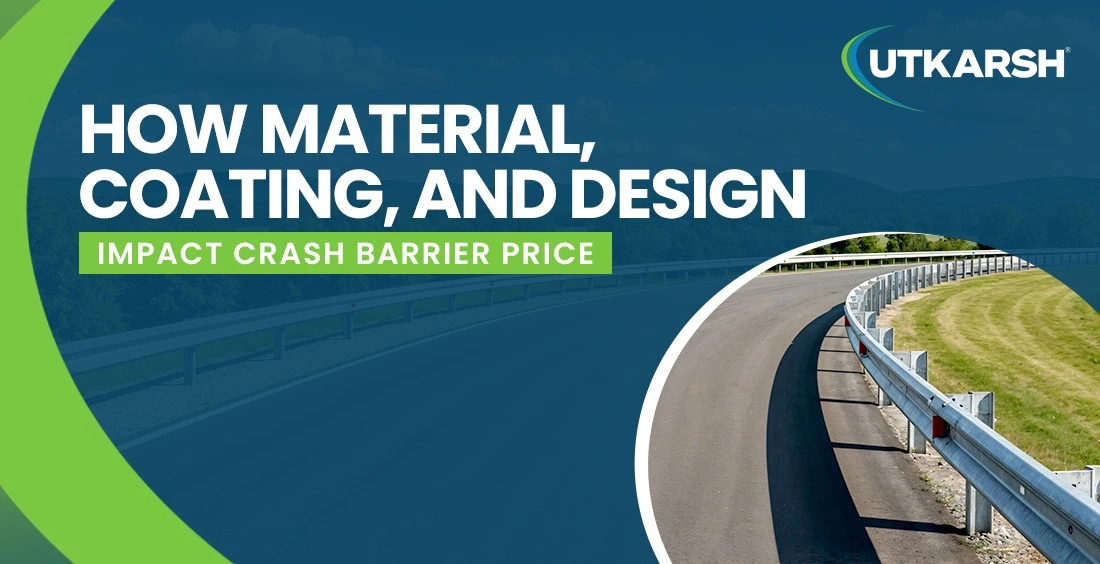
In the realm of infrastructure development, road safety is a non-negotiable priority. Metal Beam Crash Barriers (MBCB) serve as the silent guardians of our highways, designed to redirect out-of-control vehicles and minimize the severity of accidents. However, for contractors, engineers, and government bodies, understanding the crash barrier price is essential for effective project budgeting and execution.
At Utkarsh India, we believe that transparency in engineering leads to better safety outcomes. The cost of a crash barrier isn't a singular figure; it is a culmination of high-grade metallurgy, advanced protective coatings, and precise engineering designs.
In this detailed guide, we break down the minute factors that influence the pricing of road safety crash barriers.
1. Material Selection: The Foundation of Cost and Strength
The primary determinant of any crash barrier price is the raw material used. At Utkarsh India, we utilize high-strength steel that conforms to international and national standards such as IRC 119.
Steel Grade and Quality
The quality of steel directly impacts the barrier's ability to absorb kinetic energy. High-tensile steel is more expensive than commercial-grade steel, but it is necessary to meet the crash barrier specification required for high-speed expressways. When steel prices fluctuate in the global market, the cost of the finished barrier adjusts accordingly.
Thickness of the Sheet
The thickness of the metal beam (typically 3mm or more) is a critical factor. A thicker beam provides higher resistance but requires more raw material, leading to an increase in the price per meter.
2. The Impact of Design on Pricing
Crash barrier design is not a one-size-fits-all solution. The complexity of the design determines the manufacturing effort and the amount of steel required.
W-Beam vs. Thrie-Beam
- W-Beam: This is the standard design with safety compliances used for most highways. It consists of two waves and is cost-effective for general road safety.
- Thrie-Beam: Featuring a triple-wave design, the Thrie-Beam is used in high-risk areas like mountain sharp curves or bridges. Because it uses more steel and offers higher surface area protection, the Thrie-Beam crash barrier price is higher than the standard W-beam.
Component Complexity
A complete barrier system includes more than just the beam. It involves:
- Spacer Channels: Used to keep the beam away from the post.
- Posts (C-Channel or U-Channel): The vertical supports that hold the barrier.
- End Terminals: Specially designed ends to prevent the barrier from piercing a vehicle during a head-on collision.
The more sophisticated the component design (such as Fish Tail or Buffered end treatments), the higher the total project cost.
3. Coating and Galvanization: Long-Term Value vs. Upfront Cost
Since road safety crash barriers are exposed to harsh environmental conditions, including rain, humidity, and extreme heat, they require robust protection against corrosion.
Hot-Dip Galvanization
Utkarsh India specializes in Hot-Dip Galvanization. This process involves submerging the steel components in a bath of molten zinc.
- Micron Thickness: The thickness of the zinc coating (measured in microns) significantly impacts the price. A coating of 550 g/m² or 610 g/m² provides decades of rust protection.
- Durability: While a higher-quality coating increases the initial crash barrier price, it drastically reduces the Life Cycle Cost by eliminating the need for frequent replacements or painting.
4. Compliance with Specifications and Standards
Adhering to strict crash barrier specification protocols is a major factor in costing. Barriers must meet standards set by the Ministry of Road Transport and Highways (MoRTH) in India or international standards like AASHTO (USA) or EN 1317 (Europe).
To ensure compliance, manufacturers must invest in:
- Material Testing: Verifying chemical and mechanical properties.
- Dimensional Accuracy: Ensuring every hole and curve matches the design blueprint.
- Crash Testing: Certified designs that have passed real-world crash tests carry a premium because they guarantee performance and life-saving capabilities.
5. Logistics and Installation Factors
While the product price is one aspect, the final "on-site" crash barrier price includes logistics.
- Weight: Heavy-duty barriers cost more to transport.
- Ease of Assembly: Utkarsh India designs barriers for "ready-to-install" convenience. Precision-punched holes ensure that workers can install them quickly, reducing labor costs and heavy machinery rental time.
Why Choose Utkarsh India?
With over 40 years of expertise, Utkarsh India is a leader in the infrastructure segment. Our crash barriers are manufactured using state-of-the-art CNC machines, ensuring that every piece meets the highest crash barrier specification. As the best infrastructure company in India, we offer a one-stop solution from raw material sourcing to high-quality galvanization, which allows us to provide competitive pricing without compromising on safety.
Key Highlights of Utkarsh Crash Barriers:
- Manufactured from Fe 410/Fe 510 grade steel
- Zinc coating as per IS: 2629 standards
- Available in W-Beam and Thrie-Beam profiles
- Supplied to major NHAI projects across India
Also Read: A Utkarsh India Guide to Choosing the Right Metal Beam Crash Barrier
Conclusion
When evaluating the crash barrier price, it is vital to look beyond the sticker price. The material quality, the precision of the crash barrier design, and the longevity provided by superior coatings are what define the true value of the product. Investing in high-quality barriers today ensures safer roads and lower maintenance costs for decades to come.
Explore Utkarsh India’s Crash Barrier Today!
FAQs
Q1: What is the standard length of a crash barrier beam?
The standard effective length of a crash barrier beam is typically 3.81 meters or 4 meters, though customization is possible based on specific project requirements and crash barrier specifications.
Q2: Does the crash barrier price include the posts and bolts?
Usually, the price is quoted either "per meter" for the entire system or "per component." A full system includes the beam, posts, spacers, and all necessary fasteners (bolts and nuts).
Q3: How does galvanization affect the life of a crash barrier?
Hot-dip galvanization creates a metallurgical bond between the zinc and steel. This prevents rusting for 20-30 years, even in coastal or high-rainfall areas, making it a cost-effective choice in the long run.
Q4: Are W-beam and Thrie-beam barriers interchangeable?
No, they serve different purposes. Thrie-beams have a higher surface area and are generally used in areas where there is a higher volume of heavy vehicles (trucks and buses), whereas W-beams are standard for most light-to-medium traffic roads.
Q5: Why is Utkarsh India considered a preferred supplier for road safety crash barriers?
Utkarsh India provides end-to-end manufacturing, rigorous quality testing, and compliance with MoRTH and international standards, ensuring the best balance between crash barrier price and performance.