

Foundation Types Used in Ground-Mounted Solar Structures
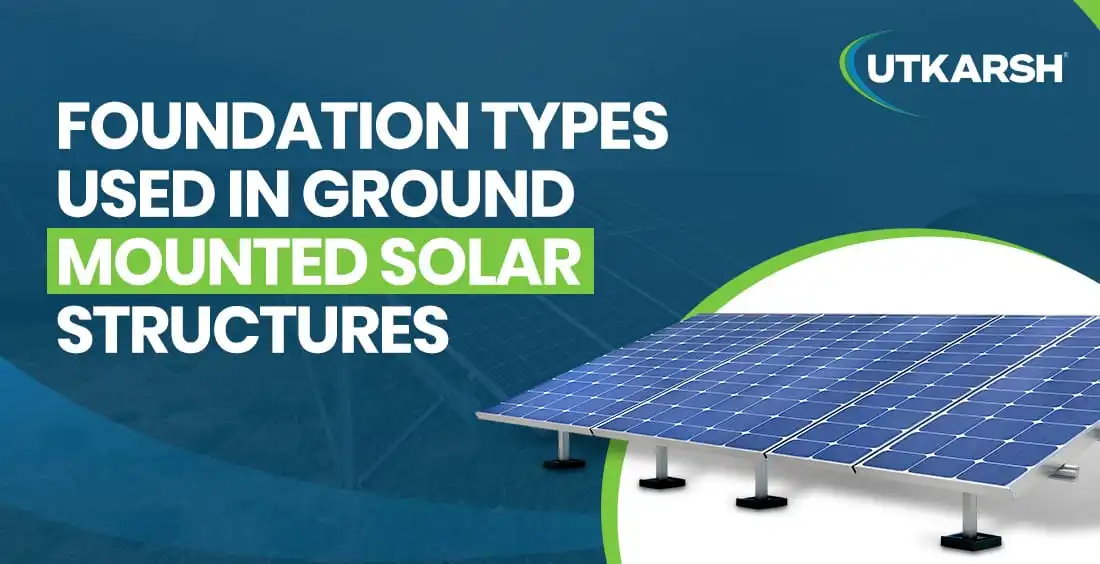
The rapid growth of solar energy projects has increased the demand for reliable and durable solar installation systems. Among various solar solutions, a ground mounted solar structure plays a crucial role in supporting photovoltaic (PV) panels installed on open land, solar farms, agricultural fields, and large-scale commercial projects.
While solar panels and mounting systems receive significant attention, the foundation beneath the structure is equally important. A properly designed foundation provides stability, supports structural loads, and ensures that the solar installation can withstand environmental challenges such as wind pressure, soil movement, and changing weather conditions.
The performance and lifespan of a solar ground mounting structure depend greatly on selecting the right foundation type according to soil conditions, terrain, project size, and load requirements.
Leading solar structure manufacturers such as Utkarsh India Limited design and manufacture advanced mounting solutions using high-quality steel, corrosion-resistant coatings, and engineered foundation systems suitable for different project requirements.
This article explains the major foundation types used in ground-mounted solar structures, their advantages, applications, and importance in ensuring long-term solar project performance.
Importance of Solar Structure Foundations
The foundation acts as the base that transfers the load of the solar mounting system and PV modules safely into the ground. It must withstand different forces throughout the operational life of the solar project.
A well-designed solar structure foundation helps provide:
- Structural stability under high wind loads
- Better load distribution across the ground
- Resistance against soil movement and environmental conditions
- Reduced maintenance requirements
- Longer operational life of the solar installation
- Secure support for solar panels throughout their 25+ year lifespan
Since solar projects are generally installed outdoors, foundations must also offer protection against corrosion and changing climatic conditions. High-quality solar mounting systems use durable materials such as hot-rolled steel, hot-dip galvanised steel, and advanced protective coatings to improve strength and durability.
Major Foundation Types for Ground-Mounted Solar Structures
The selection of foundation depends on various factors, including soil type, project size, installation speed, and environmental conditions. The commonly used foundation types for solar structures include the following:
1. Driven Pile Foundations
Driven pile foundations are among the most commonly used solutions for utility-scale solar projects. This method involves driving steel piles directly into the ground using specialised equipment.
The solar mounting structure is then attached securely to these piles.
Advantages of Driven Pile Foundations:
- Faster installation process
- Minimal excavation requirements
- Reduced ground disturbance
- Cost-effective for large solar farms
- Suitable for various soil conditions
Driven piles are especially preferred for large-scale solar farms where quick installation and reduced construction time are important.
2. Concrete Foundations
Concrete foundations are used when additional structural strength and stability are required. In this method, concrete blocks or footings are installed to support the solar mounting structure.
They are commonly used in areas where soil conditions are weak or where higher load resistance is required.
Advantages of Concrete Foundations:
- High load-bearing capacity
- Excellent structural stability
- Suitable for challenging soil conditions
- Provides strong anchoring support
Concrete foundations are often selected for commercial and industrial solar installations where additional stability is necessary.
3. Ground Screw Foundations
Ground screw foundations are an innovative and environmentally friendly solution for solar installations. These foundations use metal screws that are drilled directly into the ground to provide support.
Advantages of Ground Screw Foundations:
- Faster installation
- No major excavation required
- Reduced environmental impact
- Easy removal and reuse
- Suitable for temporary and permanent installations
Ground screws are ideal for projects where preserving the surrounding land condition is important.
4. Ballasted Foundations
Ballasted foundations use heavy materials such as concrete blocks or other weights to secure the solar mounting system without penetrating the ground.
These systems are commonly used where ground penetration is restricted.
Advantages of Ballasted Foundations:
- No drilling or excavation required
- Faster installation
- Suitable for restricted sites
- Minimal impact on the ground surface
Ballasted foundations are often used for specific commercial and industrial applications where soil penetration is not preferred.
5. Helical Pile Foundations
Helical pile foundations use steel piles with spiral plates that are screwed into the ground. These piles provide strong load-bearing capacity by distributing forces through deeper soil layers.
Advantages of Helical Pile Foundations:
- High stability in challenging soil conditions
- Quick installation
- Suitable for uneven terrain
- Reduced installation waste
They are commonly used in projects requiring additional foundation strength and flexibility.
Applications of Ground Mounted Solar Structures
A ground mounted solar structure is suitable for a wide range of solar applications, including:
Utility-Scale Solar Farms
Large solar parks require strong and durable mounting systems capable of supporting thousands of solar panels over extensive areas.
Agricultural Solar Projects
Ground-mounted systems allow farmers and landowners to utilise available land for renewable energy generation.
Commercial Solar Installations
Industries, warehouses, and commercial facilities use solar ground mounting structures to generate clean energy and reduce dependency on conventional power sources.
Industrial Solar Projects
Manufacturing plants and large infrastructure facilities require reliable solar structures designed for long-term outdoor performance.
Factors to Consider While Selecting a Solar Structure Foundation
Choosing the correct foundation type is essential for the safety and efficiency of a solar project. Important factors include:
Soil Conditions
Soil testing helps determine the appropriate foundation type and load-bearing capacity.
Wind Load Requirements
The foundation must be designed to withstand wind pressure based on the project location.
Project Size
Large solar farms may require faster installation methods such as driven piles, while smaller projects may use alternative solutions.
Installation Environment
Terrain conditions, accessibility, and environmental restrictions influence foundation selection.
Long-Term Durability
Materials and coatings should provide corrosion resistance and reliable performance throughout the project lifecycle.
Get Insights On: A Complete Guide to Ground Mounted Solar Structures
Why Choosing the Right Foundation Matters
The foundation is one of the most critical components of a solar mounting system. The right foundation selection ensures:
- Improved structural reliability
- Maximum solar panel safety
- Reduced maintenance expenses
- Better resistance against environmental conditions
- Increased project lifespan
- Improved return on investment
A professionally engineered solar ground mounting structure ensures that solar panels remain securely positioned and perform efficiently throughout their operational life.
Conclusion
The success of a solar project depends not only on the quality of solar panels but also on the strength and reliability of the supporting structure. Selecting the right foundation type ensures stability, durability, and long-term performance.
Driven piles, concrete foundations, ground screws, ballasted systems, and helical piles each offer unique benefits depending on soil conditions and project requirements.
By choosing a reliable solar structure manufacturer like Utkarsh India, the best infrastructure company in India, with expertise in engineering and fabrication, businesses can ensure efficient installation, reduced maintenance, and dependable performance from their ground mounted solar structure.
Frequently Asked Questions
1. What is a ground mounted solar structure?
A ground mounted solar structure is a support framework installed on land to hold solar panels at an optimum angle for energy generation. These structures are commonly used in solar farms, agricultural projects, and commercial solar installations.
2. Which foundation is best for a ground-mounted solar structure?
The ideal foundation depends on factors such as soil type, project size, wind conditions, and installation requirements. Driven piles are commonly used for large solar farms, while concrete, ground screws, and ballasted foundations are selected based on specific site conditions.
3. Why is foundation design important for solar mounting structures?
Foundation design ensures that the solar structure can safely withstand wind loads, environmental conditions, and the weight of solar panels. A properly designed foundation improves stability, reduces maintenance needs, and extends the life of the solar installation.
4. What materials are used for solar structure foundations?
Solar structure foundations commonly use materials such as galvanised steel, hot-rolled steel, concrete, and coated steel components. These materials provide strength, corrosion resistance, and durability for long-term outdoor applications.