

Uses And Advantages of HDPE Pipes
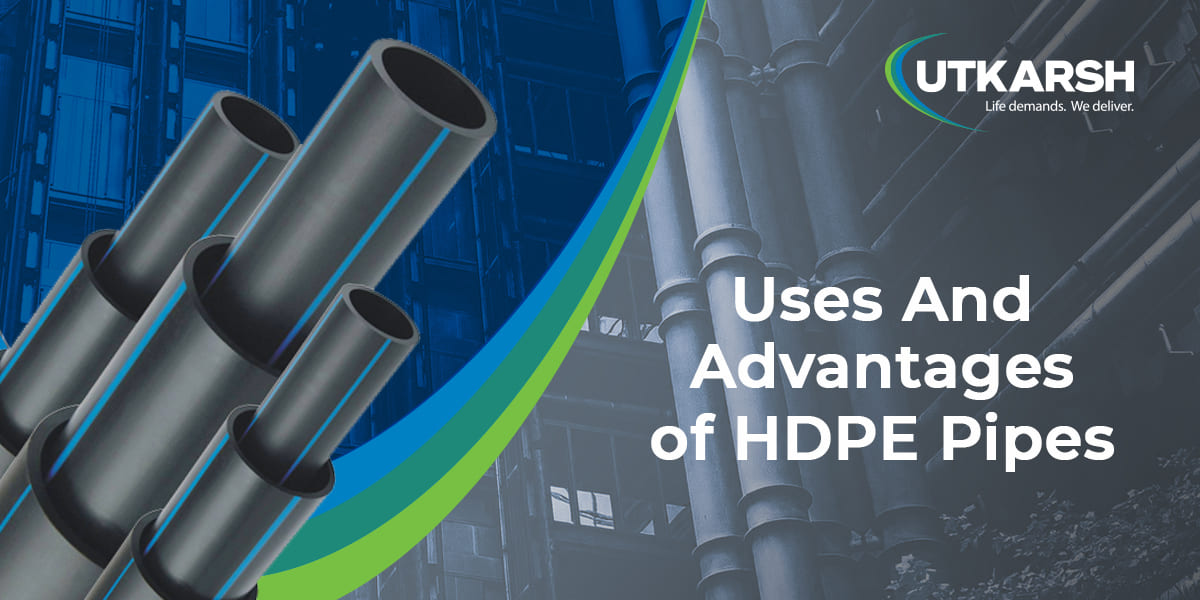
High-density polyethylene (HDPE) pipes have become an important solution for modern water supply, irrigation, drainage, sewage, and industrial piping systems. Their combination of flexibility, lightweight construction, corrosion resistance, and durable performance makes them suitable for both above-ground and underground applications.
Unlike conventional metal pipes, HDPE pipes do not rust or corrode. Their flexibility also allows them to accommodate ground movement and simplifies installation across different terrains. When joined using appropriate fusion techniques, HDPE pipes can form highly reliable pipe networks with reduced risk of leakage.
As infrastructure projects increasingly focus on durability, efficient installation, and long-term operating performance, HDPE pipes are being adopted across municipal, agricultural, industrial, and utility applications.
What are HDPE Pipes?
HDPE pipes are piping products manufactured from high-density polyethylene, a thermoplastic polymer known for its strength, chemical resistance, and flexibility.
The material can be manufactured into pipes with different diameters, pressure ratings, and wall thicknesses depending on the intended application.
HDPE pipes are commonly used for:
- Potable and municipal water supply
- Irrigation and agricultural water distribution
- Sewage and wastewater transportation
- Industrial fluid transportation
- Mining applications
- Drainage systems
- Sprinkler irrigation
- Underground and above-ground pipelines
The appropriate pipe grade, diameter, pressure class, and joining method should be selected according to project requirements.
Key Properties of HDPE Pipes
The performance of an HDPE piping system depends on material quality, pipe design, installation conditions, and application. Some of the key properties include:
High Strength-to-Weight Ratio
HDPE pipes provide good mechanical strength while remaining significantly lighter than many conventional metallic piping options. This makes them easier to transport, handle, and install.
Flexibility
The flexibility of HDPE allows pipes to accommodate gradual changes in alignment and certain levels of ground movement. This makes them useful for projects involving uneven terrain and challenging installation conditions.
Corrosion Resistance
HDPE does not rust like conventional steel or iron pipes. It also offers good resistance to many chemicals, salts, acids, and alkaline substances, depending on their concentration and operating conditions.
Impact Resistance
HDPE has good resistance to impact and mechanical stress. This characteristic can be particularly useful during transportation, handling, and installation.
Smooth Internal Surface
The relatively smooth internal surface of HDPE pipes supports efficient fluid flow and can help reduce friction losses and the accumulation of deposits.
Long Service Life
When properly designed, installed, and operated within recommended conditions, HDPE piping systems can provide a long service life. Actual service life depends on factors such as operating pressure, temperature, material grade, installation conditions, and exposure.
Major Applications of HDPE Pipes
HDPE pipes are used across several infrastructure and industrial applications because of their combination of flexibility, strength, and corrosion resistance.
1. Water Supply Systems
HDPE pipes are widely used for municipal and rural water distribution networks.
They can transport treated and potable water and are suitable for underground pipelines, distribution networks, and long-distance water transportation. Their corrosion resistance and reliable fusion joints can help reduce leakage-related issues when properly installed.
2. Agricultural Irrigation
Agricultural irrigation is another important application of HDPE pipes.
They can be used for:
- Drip irrigation systems
- Sprinkler irrigation
- Field water distribution
- Pumping systems
- Agricultural water pipelines
Their lightweight construction makes them easier to handle across large agricultural sites, while their flexibility can help simplify installation.
3. Sewage and Wastewater Systems
HDPE pipes are suitable for several sewage and wastewater applications because of their corrosion resistance and smooth internal surface.
They can be used for wastewater transportation, drainage networks, and certain sewerage systems where the pipe specifications are appropriate for the operating conditions.
4. Industrial Piping
HDPE piping systems are used in industrial environments for transporting water, wastewater, chemicals, slurry, and other fluids.
The exact suitability depends on the chemical being transported, concentration, temperature, pressure, and applicable pipe specifications. Proper material compatibility assessment is essential before selecting HDPE for chemical service.
5. Mining and Slurry Transportation
HDPE pipes can be used in mining operations for transporting water and certain abrasive slurries.
Their flexibility, impact resistance, and corrosion resistance make them suitable for demanding environments. Pipe wall thickness and material grade should be selected according to the characteristics and velocity of the transported slurry.
6. Drainage and Stormwater Management
HDPE pipes are also used for drainage and stormwater applications.
Their lightweight construction and resistance to corrosion make them suitable for underground drainage networks, culverts, and water management systems where the appropriate pipe design is selected.
Advantages of HDPE Pipes
1. Easy Handling and Installation
HDPE pipes are lighter than many traditional metallic pipes, making transportation and handling easier.
Their flexibility can also reduce the need for numerous bends and fittings in suitable installations. This can simplify the overall pipeline layout.
2. Reliable Fusion Joints
HDPE pipes can be joined using techniques such as butt fusion and electrofusion.
When correctly performed using compatible equipment and procedures, fusion creates a continuous joint between pipe sections. This can significantly reduce the number of mechanical joints and minimise potential leakage points.
3. Corrosion and Chemical Resistance
Unlike ferrous metal pipes, HDPE does not rust.
It also provides resistance to many corrosive substances and environmental conditions. However, chemical compatibility should always be verified for specialised industrial applications.
4. Flexibility and Durability
HDPE's flexibility allows it to perform effectively in applications where some ground movement or installation flexibility is required.
Its impact resistance also makes it suitable for projects where pipes may be exposed to mechanical handling or challenging installation environments.
5. Lower Maintenance Requirements
Because HDPE is resistant to corrosion and can use fusion-based joints, properly designed HDPE pipeline systems can require less maintenance compared with some conventional piping systems.
Regular inspection is still important, particularly for critical infrastructure and exposed installations.
6. Suitable for Different Installation Methods
Depending on project requirements, HDPE pipes can be installed using different methods, including conventional open-cut installation and selected trenchless techniques.
This flexibility can be useful in urban areas, road crossings, and projects where excavation needs to be minimised.
HDPE Pipes and Fittings
A reliable piping system requires more than just pipes. HDPE pipes & fittings work together to create complete pipeline networks.
Common HDPE fittings include:
- Elbows
- Tees
- Reducers
- Couplers
- End caps
- Flanges
- Service saddles
The correct fitting should be selected according to pipe diameter, pressure rating, joining method, and application.
Working with experienced hdpe fittings manufacturers can help ensure compatibility between pipes and fittings and maintain the performance of the overall pipeline system.
What to Consider When Selecting HDPE Pipes?
Before purchasing HDPE pipes, project owners and engineers should consider:
Pipe Diameter
The required diameter depends on the flow rate, pressure, pipeline length, and application.
Pressure Rating
The pipe should be selected according to the operating pressure and design conditions of the system.
Material Grade
The appropriate polyethylene grade should be selected according to applicable standards and project specifications.
Installation Conditions
Soil conditions, burial depth, temperature, terrain, groundwater, and installation method can influence pipe selection.
Joining Method
The joining technique should be compatible with the pipe and fittings and carried out using suitable equipment and trained personnel.
Applicable Standards
Selecting pipes manufactured and tested according to relevant Indian or international standards can help ensure consistent quality and performance.
HDPE Pipe Standards
HDPE pipes for different applications are manufactured according to relevant product and application standards.
Utkarsh India's HDPE piping solutions include products manufactured for applications covered by standards such as:
- IS 4984 – Polyethylene pipes for water supply
- IS 14333 – Polyethylene pipes for sewerage applications
- EN 12201 – Polyethylene piping systems for water supply
- IS 14151 – Polyethylene pipes for sprinkler irrigation systems
The applicable standard should be selected based on the intended use and project specifications.
Also Read: 6 Key Insights into HDPE Pipes: Benefits and Applications
Why Choose Experienced HDPE Pipe Manufacturers in India?
Choosing experienced hdpe pipe manufacturers in India is important for ensuring consistent material quality, dimensional accuracy, pressure performance, and reliable product testing.
A dependable manufacturer should have:
- Controlled manufacturing processes
- Appropriate testing facilities
- Quality raw materials
- Compliance with applicable standards
- Consistent dimensional control
- Reliable pipe and fitting compatibility
- Technical support for project requirements
For large infrastructure projects, these factors can contribute to the long-term reliability of the complete piping system.
HDPE Pipes from Utkarsh India
Utkarsh India, the best infrastructure company in India, offers HDPE pipes for applications including water supply, potable water distribution, sewage transportation, irrigation, and other infrastructure requirements.
Its HDPE products are designed and tested according to applicable standards and project specifications. The company provides solutions suitable for above-ground, buried, surface, and selected floating applications.
With experience across infrastructure and engineering projects, Utkarsh India focuses on manufacturing quality, testing, and application-specific piping solutions.
Conclusion
HDPE pipes provide a practical solution for modern water, irrigation, drainage, sewage, and industrial piping systems. Their combination of lightweight construction, flexibility, impact resistance, corrosion resistance, and reliable fusion joining makes them suitable for a wide range of applications.
However, selecting the right HDPE pipe requires more than simply choosing a diameter. Pressure rating, material grade, installation conditions, operating temperature, joining method, and applicable standards should all be considered before installation.
For infrastructure projects, partnering with reliable hdpe pipe manufacturers in India and experienced hdpe fittings manufacturers can help ensure that pipes and fittings work together effectively and deliver dependable long-term performance.
Frequently Asked Questions
1. What are HDPE pipes commonly used for?
HDPE pipes are commonly used for water supply, potable water distribution, agricultural irrigation, sewage and wastewater transportation, drainage, industrial piping, mining, and other utility applications.
2. Are HDPE pipes better than traditional metal pipes?
HDPE pipes offer advantages such as corrosion resistance, lightweight construction, flexibility, impact resistance, and fusion-based joining. However, the most suitable pipe material depends on the application, pressure, temperature, fluid characteristics, installation conditions, and project requirements.
3. How are HDPE pipes joined?
HDPE pipes can commonly be joined using butt fusion or electrofusion. When the correct procedure, equipment, and compatible materials are used, fusion joints can provide strong and reliable connections with a reduced risk of leakage.
4. How long do HDPE pipes last?
Properly designed and installed HDPE piping systems can have a long service life, potentially several decades. Actual lifespan depends on factors such as material quality, operating pressure and temperature, installation conditions, UV exposure, and maintenance.