

Difference Between GI And MS Pipe
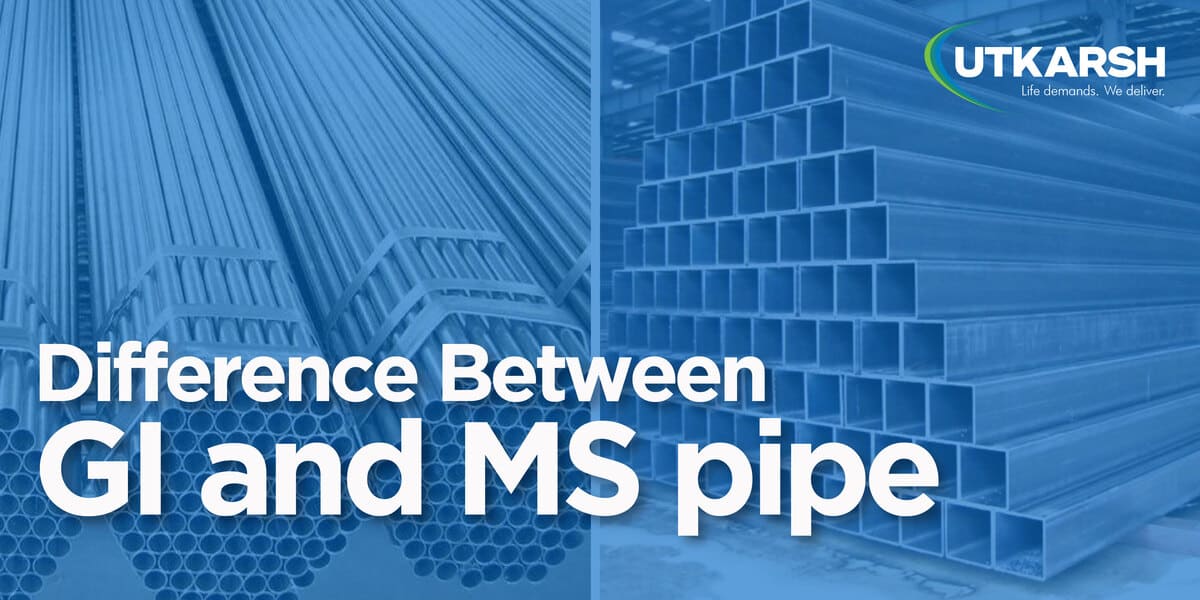
Pipes are an essential component in various industries, including construction, infrastructure, manufacturing, agriculture, and water supply systems. Among the widely used options, GI pipes and MS pipes are two popular choices due to their durability, versatility, and cost-effectiveness.
Although both pipes are manufactured using steel, their composition, surface treatment, properties, and applications differ significantly. Understanding the difference between GI and MS pipes helps industries and contractors select the right piping solution based on their specific requirements.
This guide explains the key differences between GI pipes and MS pipes, including their features, applications, advantages, and suitability for different projects.
What are GI Pipes?
The full form of GI pipe is Galvanised Iron Pipe. These pipes are manufactured using steel and coated with a protective layer of zinc through the galvanisation process. This zinc coating provides excellent resistance against rust and corrosion, making GI pipes suitable for applications where exposure to moisture is common.
GI pipes are available in different sizes and thicknesses to meet various industrial and commercial requirements. Their lightweight nature, durability, and ease of installation make them widely used for water transportation, plumbing systems, and infrastructure projects.
Features of GI Pipes
Some key features of galvanised iron pipes include:
- High resistance against rust and corrosion
- Protective zinc coating for extended service life
- Smooth surface finish
- Easy installation and maintenance
- Suitable for outdoor and moisture-prone applications
- Cost-effective solution for water supply systems
Applications of GI Pipes
GI pipes are commonly used in:
- Water supply and distribution systems
- Plumbing applications
- Agricultural irrigation systems
- Structural applications
- Fire protection systems
- Electrical conduit applications
- Industrial pipelines
Reliable GI pipe suppliers provide pipes manufactured according to industry standards to ensure durability, safety, and long-term performance.
What are MS Pipes?
The full form of MS pipe is Mild Steel Pipe. These pipes are manufactured using low-carbon steel, generally containing less than 0.25% carbon content. Due to their strength, flexibility, and weldability, MS pipes are widely used across construction, engineering, and industrial sectors.
Unlike GI pipes, MS pipes do not have a zinc coating. They are generally protected against corrosion through painting, coating, or other surface treatments, depending on the application requirements.
Features of MS Pipes
The major features of mild steel pipes include:
- High tensile strength
- Excellent weldability and fabrication flexibility
- Strong structural performance
- Cost-effective manufacturing
- Suitable for heavy-duty applications
- Available in different shapes, sizes, and thicknesses
Applications of MS Pipes
MS pipes are widely used in:
- Structural frameworks
- Industrial machinery
- Engineering applications
- HVAC systems
- Firefighting systems
- Construction projects
- Mechanical and fabrication works
An experienced MS pipe supplier offers different grades and specifications of pipes suitable for diverse industrial requirements.
Get Insights On: Why MS Square Pipes are Changing the Way India Builds Its Infrastructure
GI Pipe vs MS Pipe: Key Differences
Although both GI and MS pipes are steel-based products, they differ in terms of manufacturing process, durability, corrosion resistance, and applications.
| Difference Factor | GI Pipe | MS Pipe |
|---|---|---|
| Composition | Made from steel with a protective zinc coating | Made from low-carbon mild steel |
| Corrosion Resistance | High resistance due to galvanised zinc coating | Requires additional coating or painting for corrosion protection |
| Strength | Suitable for regular applications requiring corrosion resistance | Higher structural strength for heavy-duty applications |
| Welding | Welding requires more care due to zinc coating | Easy to weld and fabricate |
| Weight | Comparatively lighter | Heavier due to steel composition |
| Maintenance | Requires less maintenance due to corrosion protection | Requires regular protection against rust |
| Applications | Water supply, plumbing, irrigation, and outdoor applications | Construction, engineering, machinery, and structural applications |
| Customisation | Available in standard sizes | Can be customised into various shapes and sizes |
GI Pipe vs MS Pipe: Which One is Better?
The selection between GI and MS pipes depends on the application requirements.
GI pipes are preferred for applications where corrosion resistance and long service life are important, such as water supply systems, plumbing, and outdoor installations.
MS pipes are preferred for applications requiring higher strength, flexibility, and fabrication capabilities, including structural projects, industrial equipment, and heavy-duty applications.
Both types of pipes offer specific advantages, making them suitable for different infrastructure and engineering requirements.
Factors to Consider When Choosing Between GI and MS Pipes
Before selecting a pipe type, consider the following factors:
1. Application Requirement
The purpose of installation plays an important role in pipe selection. GI pipes are ideal for moisture-prone areas, while MS pipes are suitable for structural and industrial applications.
2. Environmental Conditions
For locations exposed to water, humidity, or outdoor conditions, GI pipes provide better corrosion resistance. MS pipes may require additional protective coatings in such environments.
3. Strength Requirement
Projects requiring higher load-bearing capacity and structural strength generally prefer MS pipes.
4. Maintenance Needs
GI pipes require comparatively less maintenance due to their zinc coating, while MS pipes need protective treatments to prevent corrosion.
Why Choose Quality GI and MS Pipes?
High-quality pipes ensure better performance, safety, and durability across infrastructure projects. Selecting reliable manufacturers helps ensure that pipes meet required quality standards and specifications.
A trusted best infrastructure company in India focuses on advanced manufacturing processes, quality testing, and precision engineering to deliver reliable piping solutions for industrial and commercial applications.
Conclusion
Both GI pipes and MS pipes have their own advantages and applications. GI pipes are preferred for corrosion-resistant applications, especially in water supply and plumbing systems, while MS pipes are suitable for projects requiring strength, flexibility, and structural performance.
Choosing the right pipe depends on factors such as application, environmental conditions, maintenance requirements, and project specifications. Partnering with reliable GI pipe suppliers and an experienced MS pipe supplier ensures access to durable and industry-compliant piping solutions.
Frequently Asked Questions
1. Which is better: GI pipe or MS pipe?
The choice depends on the application. GI pipes are better for corrosion resistance and water-related applications, while MS pipes are preferred for structural and heavy-duty projects due to their higher strength.
2. Are GI pipes more expensive than MS pipes?
Generally, GI pipes are slightly more expensive than MS pipes because of the additional galvanisation process that provides zinc coating and improved corrosion resistance.
3. Can MS pipes be used for outdoor applications?
Yes, MS pipes can be used outdoors, but they require proper surface treatment such as painting or coating to protect them from rust and corrosion.