

5 Facts on PEB Steel Structure
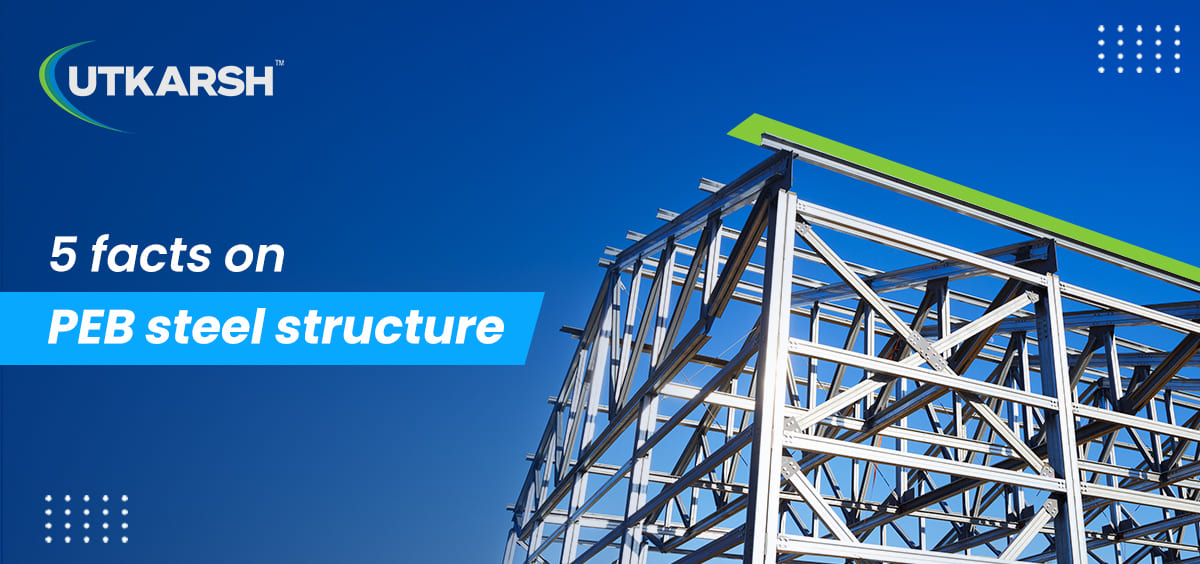
Pre-Engineered Buildings (PEBs) have become an important solution for modern industrial, commercial, and infrastructure projects. A pre engineered metal building is designed and engineered according to project requirements, with its structural components fabricated in a controlled manufacturing facility before being transported to the site for assembly.
Unlike conventional construction, where much of the fabrication and assembly takes place at the project site, PEB construction combines detailed engineering, factory fabrication, and faster on-site installation. This approach helps reduce construction time, optimise material usage, and maintain consistent quality.
From warehouses and factories to aircraft hangars, industrial sheds, and commercial facilities, PEB structures can be customised for different spans, heights, loads, and operational requirements.
Here are five important facts about PEB steel structures that help explain their growing use in modern construction.
1. PEB Structures are Designed and Fabricated Before Site Assembly
One of the defining features of a PEB is that its major structural components are engineered and fabricated before they reach the construction site.
The design process considers factors such as:
- Building dimensions and clear span requirements
- Dead and live loads
- Wind loads
- Seismic conditions
- Roof and wall systems
- Equipment and crane loads, where applicable
- Project-specific architectural and functional requirements
Once the design is finalised, components are fabricated under controlled factory conditions. They are then transported to the project location and assembled using bolted connections and other specified joining methods.
This reduces the amount of fabrication required at the site and can help streamline the overall construction process.
2. Primary and Secondary Members Form the Main Structural Framework
A PEB consists of several engineered components that work together to provide structural strength and stability.
Primary Structural Members
Primary members carry the major structural loads and form the main framework of the building. These generally include:
- Columns
- Rafters
- Main frames
- Other load-bearing structural members
Columns and rafters are designed according to the project's span, height, loading conditions, and other engineering requirements. Their connections are carefully detailed to ensure proper alignment and structural performance during assembly.
Secondary Structural Members
Secondary framing supports the primary structure and helps distribute loads across the building. Common components include:
- Purlins
- Girts
- Bracing systems
- Eave struts
- Base angles
Together, primary and secondary members create a stable structural framework suitable for a wide range of building applications.
3. Roofing and Cladding Systems Protect the Building
Roofing and cladding are important parts of a PEB because they form the building envelope and protect the internal space from external conditions.
Depending on the project requirements, PEB roofing and wall systems can be designed to provide:
- Weather protection
- Water resistance
- Thermal performance
- Durability
- Controlled indoor conditions
- A clean and functional exterior finish
Additional elements such as insulation, skylights, gutters, ventilation systems, doors, windows, and rainwater management systems can also be incorporated into the building design.
This allows PEB structures to be adapted for different operational environments, from industrial manufacturing facilities to warehouses and commercial buildings.
4. PEB Construction Can Reduce Project Time and Material Waste
Faster construction is one of the major reasons businesses choose PEB solutions.
Since components are fabricated in a controlled manufacturing environment, several activities can take place simultaneously. While the foundations and other site preparations are being completed, structural components can be manufactured and prepared for transportation.
Once the components arrive at the site, the structure can be erected according to the approved design and assembly sequence.
Factory-controlled fabrication can also improve material utilisation and reduce unnecessary wastage. Computer-aided design, precision cutting, automated fabrication equipment, and controlled production processes help maintain consistency across structural components.
As a result, PEBs can offer an efficient construction approach for projects where faster completion and controlled material usage are important.
5. PEB Structures Can Be Used for Diverse Applications
A major advantage of PEB construction is its flexibility. The structural system can be engineered for different building sizes, spans, heights, and functional requirements.
Some common applications include:
Warehouses and Storage Facilities
PEB warehouses can provide large, open spaces for storage, logistics, distribution, and inventory management.
Industrial Sheds and Factory Buildings
PEB structures are suitable for manufacturing units, workshops, fabrication facilities, and production plants where large working areas are required.
Aircraft Hangars
Their ability to accommodate large spans makes PEBs suitable for hangars requiring wide, obstruction-free spaces.
Commercial Buildings
PEB solutions can be adapted for offices, retail facilities, service centres, and other commercial applications.
Railway and Infrastructure Facilities
PEB structures can also be used for railway sheds, maintenance facilities, transit-related buildings, and other infrastructure projects.
Auditoriums and Large-Span Buildings
The flexibility of PEB systems makes them suitable for auditoriums and other buildings requiring large covered spaces.
Get Insights On: 5 Reasons Why Pre Engineered Steel Buildings Are a Builder’s First Choice
Key Benefits of PEB Steel Structures
Beyond their applications, PEBs offer several practical benefits:
- Faster construction: Factory fabrication and streamlined site assembly can shorten project timelines.
- Material efficiency: Engineered designs help optimise the quantity and utilisation of steel.
- Design flexibility: Structures can be customised according to span, height, loading, and functional requirements.
- Easy expansion: Certain PEB designs can accommodate future extensions or modifications.
- Consistent quality: Controlled manufacturing and testing processes help maintain product consistency.
- Reduced site work: More fabrication takes place before components reach the project site.
- Long-term durability: Properly designed and protected steel structures can provide reliable performance over their service life.
What to Look for in PEB Building Manufacturers?
Choosing the right pre engineered building manufacturers is important because the quality of engineering, fabrication, raw materials, testing, and installation can directly affect the performance of the completed structure.
Before selecting a PEB building company, consider:
- In-house engineering and design capabilities
- Fabrication capacity
- Quality of structural steel and other raw materials
- Welding and fabrication facilities
- In-house testing capabilities
- Compliance with applicable standards
- Experience with large and complex projects
- Installation and technical support
- Transportation and project delivery capabilities
A manufacturer with integrated engineering, fabrication, testing, and project support can provide better control over the complete PEB manufacturing process.
Why Choose Utkarsh India for PEB Structures?
Utkarsh India provides engineered PEB solutions for industrial, commercial, and infrastructure applications. The company has an in-house fabrication setup with a capacity of up to 25,000 MT per month, supporting projects that require large-scale steel fabrication.
Its PEB solutions are manufactured using quality materials and are designed to meet applicable project and structural requirements. In-house testing facilities help monitor the quality of raw materials and finished products throughout the manufacturing process.
Utkarsh India also provides engineering support, installation assistance, technical advisory, and logistics support for PEB projects across India.
With experience in critical steel fabrications such as transmission towers, telecom towers, high mast poles, railway electrification structures, and other infrastructure solutions, the company brings extensive fabrication and engineering expertise to PEB projects.
Final Takeaway
PEB steel structures offer a practical alternative to conventional construction for projects that require speed, structural efficiency, flexibility, and controlled fabrication. Their factory-manufactured components, engineered connections, and adaptable designs make them suitable for warehouses, factories, industrial sheds, hangars, commercial facilities, and other large-span applications.
For businesses planning a new facility or expansion, working with experienced pre engineered building manufacturers can help ensure that the structure is properly designed, fabricated, tested, and installed according to project requirements.
Frequently Asked Questions
1. What is a PEB steel structure?
A PEB steel structure is a building system in which structural components are engineered and fabricated in a controlled manufacturing facility before being transported to the site for assembly. It is commonly used for warehouses, factories, industrial sheds, hangars, and other large-span buildings.
2. What are the main components of a PEB?
The main components generally include primary members such as columns and rafters, secondary members such as purlins and girts, bracing systems, roofing and cladding systems, and various accessories required for the building.
3. What are the main advantages of PEB construction?
PEB construction can offer faster installation, efficient material utilisation, design flexibility, reduced site fabrication, consistent manufacturing quality, and easier future expansion compared with many conventional construction methods.
4. Where are PEB structures commonly used?
PEB structures are commonly used for warehouses, factories, industrial sheds, workshops, aircraft hangars, railway facilities, commercial buildings, auditoriums, storage facilities, and other projects requiring efficient steel structures and large covered spaces.