

Water Tank Structure: What is the Purpose and So Much More
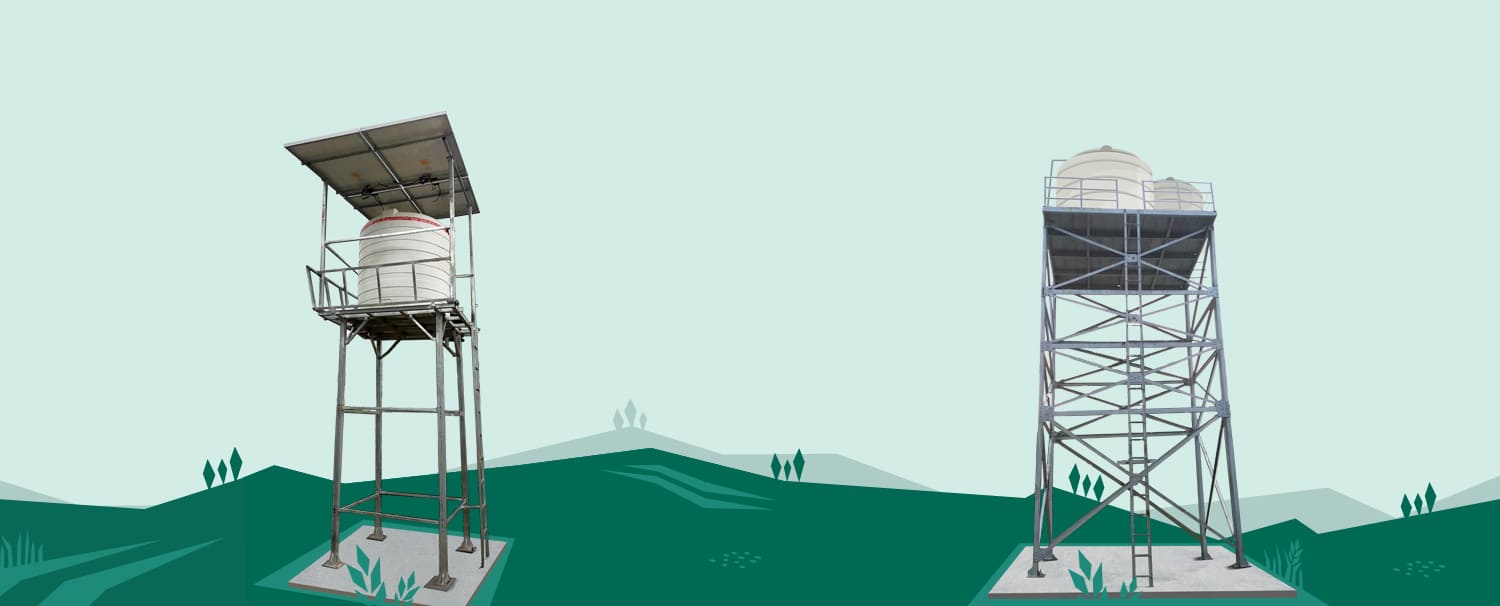
A reliable water storage system is essential for residential buildings, commercial facilities, industrial units, and infrastructure projects. While the tank stores water, an elevated support system plays an equally important role in keeping the tank stable and maintaining the required water pressure.
A water tank tower structure is a steel framework designed to support an overhead water tank at a suitable height. By elevating the tank, the structure allows water to flow through pipelines using gravity, reducing dependence on continuous pumping for distribution.
From homes and apartments to factories, agricultural facilities, and municipal water systems, overhead water tanks are widely used wherever a reliable water supply is required.
In this blog, we will understand what a water tank structure is, its key components, how it works, and why proper structural design is important.
What is a Water Tank Structure?
A water tank structure is a supporting framework that holds an overhead water storage tank above ground level. The structure transfers the weight of the tank and stored water safely to the foundation while maintaining stability under different environmental and operating conditions.
These structures are generally made from structural steel because steel offers high strength, durability, and design flexibility. The height and configuration of the structure depend on factors such as tank capacity, site conditions, water demand, and project requirements.
A properly designed water tank tower structure should be capable of handling:
- The self-weight of the tank and supporting structure
- The weight of stored water
- Wind loads
- Seismic forces, where applicable
- Operational and maintenance loads
- Site-specific environmental conditions
For long-term outdoor use, corrosion protection is also important. Galvanized steel can provide additional protection against rust and moisture exposure when appropriately specified for the project.
Key Components of an Overhead Water Tank Structure
An overhead water tank system consists of more than just a storage tank. Several structural and functional components work together to ensure safe storage, access, and water distribution.
1. Steel Supporting Framework
The supporting framework carries the load of the tank and transfers it safely to the foundation. Columns, beams, bracing members, and other structural components are designed according to the required tank capacity, height, and site conditions.
The strength and stability of this framework are critical because even a small structural deficiency can affect the safety of the entire system.
2. Foundation
The foundation transfers the loads from the tower to the ground. Its design depends on factors such as soil bearing capacity, tower height, tank capacity, and site-specific loading conditions.
A suitable foundation helps prevent excessive settlement, tilting, or movement of the structure.
3. Bracing System
Bracing members improve the lateral stability of the tower. They help the structure resist forces caused by wind, seismic activity, and other horizontal loads.
The bracing arrangement is selected based on the structural design and required performance of the tower.
4. Access Ladder and Platform
An access ladder and maintenance platform allow personnel to safely inspect and maintain the tank and its associated components.
These elements should be designed with appropriate safety considerations and suitable corrosion protection for outdoor environments.
5. Inlet, Outlet and Overflow Connections
The tank requires properly designed connections for filling and distributing water. An overflow arrangement helps manage excess water when the tank reaches its operating capacity.
The location and sizing of these connections should be determined according to the tank and plumbing system requirements.
6. Vent and Inspection Openings
Suitable ventilation and inspection arrangements help with tank maintenance and operation. Inspection openings or manholes provide access for cleaning, examination, and periodic maintenance.
How Does a Water Tank Structure Work?
The working principle of an overhead water tank system is relatively simple.
Water is pumped or supplied from a source into the elevated tank. Once stored, the water remains available for distribution when required. Because the tank is positioned above the points of use, gravity creates water pressure as the water flows downward through the connected pipelines.
The basic process can be understood as:
Water Source → Pumping/Supply System → Elevated Tank → Distribution Pipeline → End Users
The height of the tank and the design of the distribution system influence the available pressure. In applications where additional pressure is required, pumps or other pressure-management systems may be incorporated.
This arrangement provides a useful combination of water storage and gravity-based distribution, making overhead tanks practical for many applications.
What is the Purpose of a Water Tank Structure?
The primary purpose of a water tank structure is to safely elevate and support a water storage tank while enabling reliable water distribution.
Some of its important functions include:
Maintaining Water Availability
Stored water can be used during periods of fluctuating supply or increased demand, helping provide greater continuity of water availability.
Supporting Gravity-Based Distribution
Elevating the tank allows water to flow through distribution pipelines using gravity. This can reduce the need for continuous pumping during normal demand periods.
Providing Water for Different Applications
Overhead water storage systems are used for:
- Residential water supply
- Commercial buildings
- Industrial facilities
- Agriculture and irrigation
- Institutional buildings
- Municipal water systems
- Fire-water storage, where designed for the purpose
Improving System Reliability
A properly designed elevated storage system can act as a buffer between water supply and consumption, helping manage variations in demand.
Factors to Consider When Designing a Water Tank Tower Structure
The design of a water tank support structure should be based on the actual requirements of the project rather than a one-size-fits-all approach.
Important factors include:
- Tank Capacity: The supporting structure must safely accommodate the full operating load of the tank and stored water.
- Tower Height: The required elevation depends on water pressure requirements, site layout, and distribution conditions.
- Wind Loads: Elevated structures are exposed to wind forces, making wind-load assessment an important part of structural design.
- Seismic Conditions: Where applicable, the structure should be assessed for seismic forces based on the project's location and applicable design requirements.
- Soil Conditions: Foundation design depends significantly on the site's soil characteristics and bearing capacity.
- Corrosion Protection: Outdoor steel structures require suitable protection against moisture and environmental exposure.
- Maintenance Access: Ladders, platforms, and inspection provisions should allow safe access to the tank and structural components.
Why Galvanized Steel is Suitable for Water Tank Structures
Water tank support structures are commonly installed outdoors, where they can be exposed to rain, humidity, and other environmental conditions. Corrosion protection is therefore an important consideration.
Galvanized steel is protected with a zinc coating that helps reduce exposure of the underlying steel to corrosive elements. This can support longer service life and reduce maintenance requirements when the structure is properly designed and maintained.
For infrastructure applications where durability and long-term performance are important, galvanized steel can be a practical choice for water tank supporting structures.
Get Insights On: How Galvanized Steel Improves Overhead Water Tank Durability
Applications of Water Tank Tower Structures
Water tank structures are used across a wide range of sectors, including:
- Residential buildings: Overhead storage for household water requirements
- Commercial facilities: Water storage for offices, hotels, malls, and other buildings
- Industrial plants: Process and utility water storage
- Agriculture: Water storage for irrigation systems
- Institutional facilities: Schools, hospitals, and public buildings
- Municipal infrastructure: Elevated storage and distribution systems
- Fire protection systems: Dedicated water storage where required by the project
The size, height, configuration, and structural specifications can vary depending on the application.
Why Choose Utkarsh India for Water Tank Structures?
Utkarsh India, the best infrastructure company in India, provides steel infrastructure solutions designed for diverse project requirements. Its steel fabrication and structural engineering capabilities support the development of durable solutions for infrastructure applications.
The company's approach focuses on:
- Quality-controlled steel fabrication
- Project-specific structural design
- Corrosion-resistant solutions
- Precision manufacturing
- Quality testing and inspection
- Infrastructure-focused engineering expertise
With more than four decades of experience in steel and infrastructure solutions, Utkarsh India works across multiple sectors and applications.
For projects requiring a durable and professionally engineered water tank tower structure, selecting a manufacturer with suitable design, fabrication, and quality-control capabilities is an important consideration.
Conclusion
A water tank structure does much more than hold an overhead tank. It provides the structural support required to safely elevate stored water and enables gravity-based distribution across residential, commercial, agricultural, industrial, and infrastructure applications.
From foundation design and structural framing to bracing and corrosion protection, every component contributes to the safety and service life of the system.
For reliable infrastructure solutions, Utkarsh India combines steel fabrication capabilities and engineering expertise to deliver structures designed around project-specific requirements. As a company serving diverse infrastructure needs, it continues to contribute to projects that require durable and dependable steel solutions.
FAQs
1. What is a water tank tower structure?
A water tank tower structure is a steel supporting framework used to elevate and safely support an overhead water storage tank. It transfers the tank and water loads to the foundation while providing the required stability.
2. Why are water tanks placed at a height?
Elevating a water tank allows gravity to help distribute water through pipelines. The available water pressure depends on factors such as tank elevation, pipeline configuration, and system requirements.
3. What material is commonly used for water tank structures?
Structural steel is commonly used because of its high strength, durability, and flexibility in fabrication. Galvanized steel can also provide additional corrosion protection for outdoor applications.
4. What factors affect the design of a water tank structure?
Tank capacity, tower height, wind loads, seismic conditions, soil properties, foundation requirements, and maintenance access are some of the key factors considered during design.
5. How can corrosion be reduced in a steel water tank structure?
Suitable protective systems, including galvanization or appropriate protective coatings, can help reduce corrosion. The right solution depends on the environmental conditions and project requirements.
6. How do I choose a water tank structure manufacturer?
Look for a manufacturer with experience in structural steel fabrication, project-specific design capabilities, quality-control processes, and experience with infrastructure applications. This helps ensure that the structure is designed and manufactured according to the project's requirements.