

Useful insights on wireless telecommunications by a telecom tower manufacturer
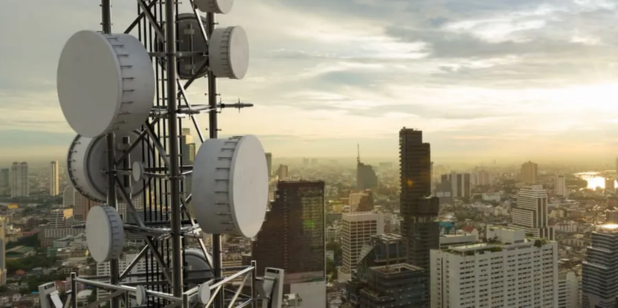
Wireless communication has transformed the way people connect, communicate, and access information. From mobile phones and television broadcasting to GPS navigation and Wi-Fi, wireless telecommunications have become an integral part of modern life. Behind these seamless communication networks lies a robust infrastructure supported by reliable telecom towers.
As one of the leading telecommunications tower companies, we share some interesting insights into wireless telecommunications and the infrastructure that powers today's connected world.
What is Wireless Telecommunications?
Wireless telecommunications refers to the transmission of voice, data, video, and other information without the use of physical cables. Instead, communication takes place through electromagnetic waves such as radio waves, microwaves, and infrared signals.
Today, wireless communication supports numerous applications, including:
- Mobile phone networks
- Radio and television broadcasting
- Wi-Fi connectivity
- GPS navigation
- Satellite communication
- Internet of Things (IoT) devices
- Smart city infrastructure
The rapid growth of wireless technology has significantly improved communication speed, accessibility, and connectivity across the globe.
The First Wireless Conversation
The roots of wireless communication date back to 1880, when Alexander Graham Bell and Charles Sumner Tainter invented the Photophone.
Unlike conventional telephones, the Photophone transmitted sound using a beam of light instead of electrical wires. Although the technology was ahead of its time, it laid the foundation for future wireless communication systems.
Early Wireless Communication Used Morse Code
The earliest wireless transmitters relied on Morse Code to send messages across long distances.
As radio technology evolved, wireless systems became capable of transmitting voice and music, revolutionising global communication. By the 1920s, the term "radio" had largely replaced the earlier expression "wireless telegraphy."
Modern Wireless Technology Focuses on High-Speed Data
Today's wireless communication extends far beyond voice transmission. Modern networks are designed to deliver high-speed data services that support:
- Internet browsing
- Video conferencing
- Cloud computing
- Online streaming
- Digital payments
- Smart devices
- Industrial automation
The deployment of advanced technologies such as 4G, 5G, and future wireless networks continues to drive faster, more reliable communication across industries.
Different Types of Wireless Networks
Wireless communication operates through different types of networks, each designed for specific coverage areas and applications.
Wireless Personal Area Network (WPAN)
A WPAN connects devices over short distances.
Common examples include:
- Bluetooth headphones
- Wireless keyboards
- Smartwatches
- Wireless computer peripherals
Wireless Local Area Network (WLAN)
A WLAN provides wireless connectivity within a limited area such as:
- Homes
- Offices
- Educational institutions
- Hospitals
- Commercial buildings
Wi-Fi is one of the most widely used WLAN technologies.
Metropolitan Wireless Network (MWN)
A Metropolitan Wireless Network covers a larger geographical area than a local network, connecting users across cities or metropolitan regions while providing reliable wireless access.
Wireless Wide Area Network (WWAN)
WWANs provide communication across large geographical regions using cellular technologies.
These networks support:
- Mobile internet
- Voice calls
- Nationwide cellular connectivity
- Long-distance wireless communication
Understanding Cellular Network Technologies
Cellular communication has evolved through multiple generations of technology, improving speed, reliability, and network capacity.
Historically, two major cellular technologies were widely used:
GSM (Global System for Mobile Communications)
GSM networks:
- Support simultaneous voice and data transmission
- Use removable SIM cards
- Enable easy switching between compatible devices
- Are widely adopted across the world
CDMA (Code Division Multiple Access)
CDMA networks:
- Traditionally relied on device-based subscriber identification
- Offered efficient spectrum utilisation
- Were supported by selected mobile operators and compatible devices
Today, modern technologies such as 4G LTE and 5G have become the dominant standards for mobile communication worldwide, offering significantly higher data speeds and lower latency.
Wi-Fi vs Wireless Telecommunications
Although Wi-Fi is a wireless technology, it represents only one part of the broader wireless telecommunications ecosystem.
| Wi-Fi | Wireless Telecommunications |
|---|---|
| Provides internet connectivity over a limited area | Covers local, regional, national, and global communication networks |
| Operates through wireless routers | Operates through telecom towers, satellites, and communication infrastructure |
| Primarily connects local devices | Supports mobile networks, broadcasting, satellite communication, IoT, and more |
Both technologies work together to provide seamless communication and internet access.
Why Telecom Towers are Essential
Telecom towers form the backbone of modern wireless communication networks. They support antennas and transmission equipment that enable uninterrupted connectivity for millions of users.
High-quality telecom towers offer several advantages:
- Reliable network coverage
- Support for multiple telecom operators
- Improved signal strength
- Enhanced network capacity
- Faster deployment of 4G and 5G infrastructure
- Long-term structural durability
- Resistance to harsh environmental conditions
As digital connectivity continues to expand, the demand for robust telecom infrastructure is expected to grow rapidly.
Partner with a Trusted Telecom Tower Manufacturer
Choosing experienced telecom tower companies ensures dependable infrastructure capable of supporting evolving communication technologies.
As one of the leading telecommunications tower companies and among the best infrastructure company in India, Utkarsh India manufactures high-quality telecom towers designed in accordance with IS 2062:2011, E250, and E350 steel standards.
Our manufacturing capabilities include advanced fabrication facilities and four 12.5-metre hot-dip galvanizing plants, using premium-grade zinc to deliver superior corrosion resistance, structural strength, and long service life for telecom infrastructure projects across India.
FAQs
1. What is the role of telecom towers in wireless communication?
Telecom towers support antennas and communication equipment that transmit and receive wireless signals, enabling mobile networks, internet services, broadcasting, and other wireless communication technologies.
2. What are the different types of wireless networks?
The main types of wireless networks include Wireless Personal Area Networks (WPAN), Wireless Local Area Networks (WLAN), Metropolitan Wireless Networks (MWN), and Wireless Wide Area Networks (WWAN), each serving different communication requirements.
3. Why choose experienced telecommunications tower companies?
Experienced telecommunications tower companies provide durable, high-quality structures that comply with industry standards, ensure reliable network performance, support advanced technologies such as 4G and 5G, and offer long-term operational reliability for telecom infrastructure projects.